Skip to content






Short Answer: Yes, Mercari is legit. It is a real, publicly traded company that holds your money until your item arrives. But its safety net only lasts 72 hours after delivery, and that one rule decides most bad experiences.
You find a pair of barely worn sneakers on Mercari for half the store price. The seller has 400 five-star reviews. Your thumb hovers over “Buy.”
Then a question pops up. Is Mercari legit, or are you about to get a box of rocks?
In this Mercari review, we’ll answer that with real numbers. We’ll explain how safe is Mercari for buyers and sellers, moreover, we’ll discuss how Mercari protects buyers and sellers.
Also, we’ll discuss what Mercari users complain about and which Mercari scams to watch for.
Mercari At a Glance
| Fact | Detail |
| Founded | 2013 in Tokyo, Japan; US app launched in 2014 |
| Ownership | Mercari, Inc., listed on the Tokyo Stock Exchange |
| US sales (FY2026) | $810 million in gross merchandise value (GMV) |
| US monthly active users | About 4.2 million |
| Seller fee | 10% of item price + buyer-paid shipping |
| Buyer fee | 3.6% Buyer Protection fee |
| Buyer protection window | 72 hours (3 days) after delivery |
| Trustpilot score | 1.2 out of 5 (21,000+ reviews) |
What Is Mercari?
Mercari is an online marketplace where anyone can buy and sell used or new items. You can find clothes, electronics, trading cards, home goods, and toys in one marketplace.
Mercari is huge in Japan. In the year ending June 2026, Mercari’s Japan marketplace hit ¥1.29 trillion in sales and 24.19 million monthly users.
The US business is much smaller and has been bumpy. Its yearly sales reached $810 million in fiscal 2026, up 11%, but still about 20% below the $1.015 billion it hit in fiscal 2023.
Growth also cooled recently. From July to September 2026, US sales grew just 0.3% to $194 million, as Vinted and Depop pushed cheap shipping deals.
Why does this matter to you? A slower US business means Mercari is fighting hard for users with promos like free shipping on orders over $50+. That is good news for buyers right now.
Also Read: Is Whatnot Legit?
How Does Mercari Work?
- A seller lists an item with photos, a price, and a shipping choice.
- A buyer pays through the app. Mercari holds that money.
- The seller ships, usually within 3 business days, using a Mercari prepaid shipping label or their own.
- The item arrives. The buyer has 72 hours to inspect it and rate the seller.
- Once the buyer rates, or 72 hours pass, Mercari releases the money to the seller.
This “hold the money first” setup is called escrow. It is the main reason Mercari is safer than meeting a stranger from a classified ad.
Of course, nothing on Mercari is free, so let’s look at what each side pays.
Mercari Fees in 2026: What Buyers and Sellers Pay
Mercari’s fees changed three times since 2024. Here is the current Mercari fee structure in the US for listings created or updated on or after January 6, 2025.
| Fee | Who Pays | Amount |
| Listing an item | Seller | Free |
| Selling fee | Seller | 10% of item price + buyer-paid shipping |
| Buyer Protection fee | Buyer | 3.6% of item price + buyer-paid shipping |
| Payment processing | Nobody | $0 (removed January 2025) |
| Direct deposit payout | Seller | Free; $2 if a deposit fails |
| Instant Pay payout | Seller | $3 per cash-out, up to $600 a month |
| Frequent cancellations | Seller | 5% of item price, capped at $25 |
| Mercari Authenticate | Seller | $5 for eligible items over a set price |
One detail catches new sellers off guard. Mercari takes 10% of the shipping the buyer pays, not just the item price.
Let’s Understand Mercari Fees with a $50 Dress Sale
Say you sell a dress for $50 on Mercari, and the buyer pays $8 for shipping.
- Mercari Seller Fee: 10% of $58 = $5.80
- Shipping Label Cost: $8.00 goes to the carrier
- Mercari Seller Keeps: $44.20 before the cost of the dress
- Mercari Buyer Pays: $58 + $2.09 Buyer Protection fee = $60.09, plus any sales tax
In short, the Mercari seller keeps about 88% of the item price on this sale. Standard payouts take up to 5 business days, while Instant Pay lands in about 30 minutes.
So what does that 3.6% buyer fee actually buy you? That is where Mercari’s safety rules come in.
Is Mercari Safe to Buy From?
Yes, as long as you pay and talk inside the Mercari app. Mercari’s Buyer Protection covers items that never arrive, arrive damaged, or differ greatly from the listing.
The catch is time. You have 72 hours after delivery to report a problem, which is much shorter than eBay’s 30-day money-back window.
The moment you rate the seller, your protection ends and the seller gets paid. Many one-star Trustpilot reviews come from Mercari buyers who rated first and checked later.
Mercari Buyer Safety Checklist:
- Open the package the day it arrives, and film the unboxing for pricey items.
- Do not rate the Mercari seller until the item works and matches the photos.
- If something is wrong, open a refund request in the Mercari app before the 72 hours end.
- Check the Mercari seller’s rating count, not just the stars. Five stars from 3 sales tells you little.
Is Mercari Safe to Sell On?
Mostly, but sellers on Mercari carry more risk than buyers. Mercari tends to side with the buyer when the proof is unclear, which is the top seller complaint online.
Your best defense is proof. Take clear photos of flaws, weigh your box, and always use tracked shipping. Mercari prepaid shipping labels include up to $200 in shipping protection.
Also, ship on time. Late shipping and cancellations can trigger the cancellation fee and hurt your Mercari account standing.
Common Mercari Scams (and How to Spot Them)
Mercari itself is not a scam, but scammers do use it. Nearly every trick below works by beating the 72-hour clock or pulling you out of the app.
1. The Off-Platform Payment Request
This is the most common Mercari scam, and it targets buyers. A seller lists a hot item, like a game console or designer bag, at a tempting price.
When you message them, they say their account is “glitching” or “on hold.” They offer a discount if you pay by Zelle, Cash App, Venmo, or PayPal Friends and Family instead.
Once you send the money, the seller goes quiet or blocks you. Because the payment never touched Mercari, you can’t open a claim, and apps like Zelle rarely reverse payments.
Red Flags:
- The price is far below what similar items sell for.
- The seller asks for your phone number or email early in the chat.
- They push you to “save on fees” by paying another way.
What to Do:
Say no and report the listing. Mercari’s rules ban off-app payments, so asking for one is a scam signal by itself.
2. The Fake Mercari Support Message
This scam hits buyers and sellers alike. Someone pretends to be Mercari staff and contacts you by text, email, or even a Mercari chat message.
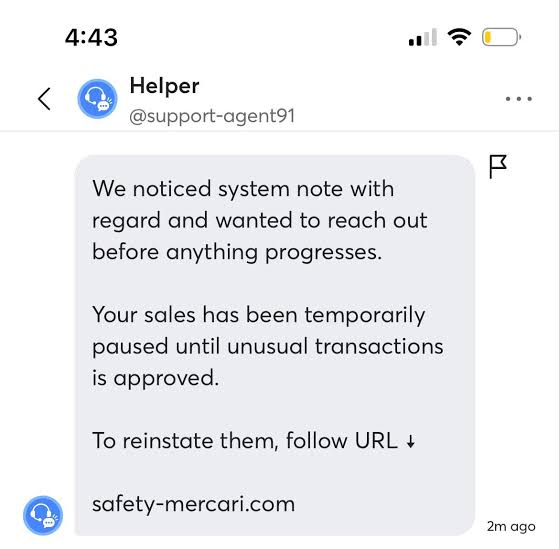
They create panic about a “payment problem,” a “locked account,” or a “failed deposit.” Then they send a link or ask you to share a login code to “verify” your account.
That link leads to a fake login page. Once they have your password or code, they can drain your balance, change your bank details, or list fake items under your name.
Red Flags:
- “Mercari support” reaches out to you first through a buyer or seller chat.
- The message demands fast action, like “respond within 1 hour.”
- They ask for a password, a text code, or a photo of your ID.
What to Do:
Never share login codes with anyone. If you’re unsure, close the message and open the Help Center inside the app yourself. Turning on two-step verification adds another layer of protection.
3. The Wrong Item or Empty Box
This scam plays the timing game against buyers. The seller ships something cheap, like an empty box or a knockoff, using the real order’s tracking number.
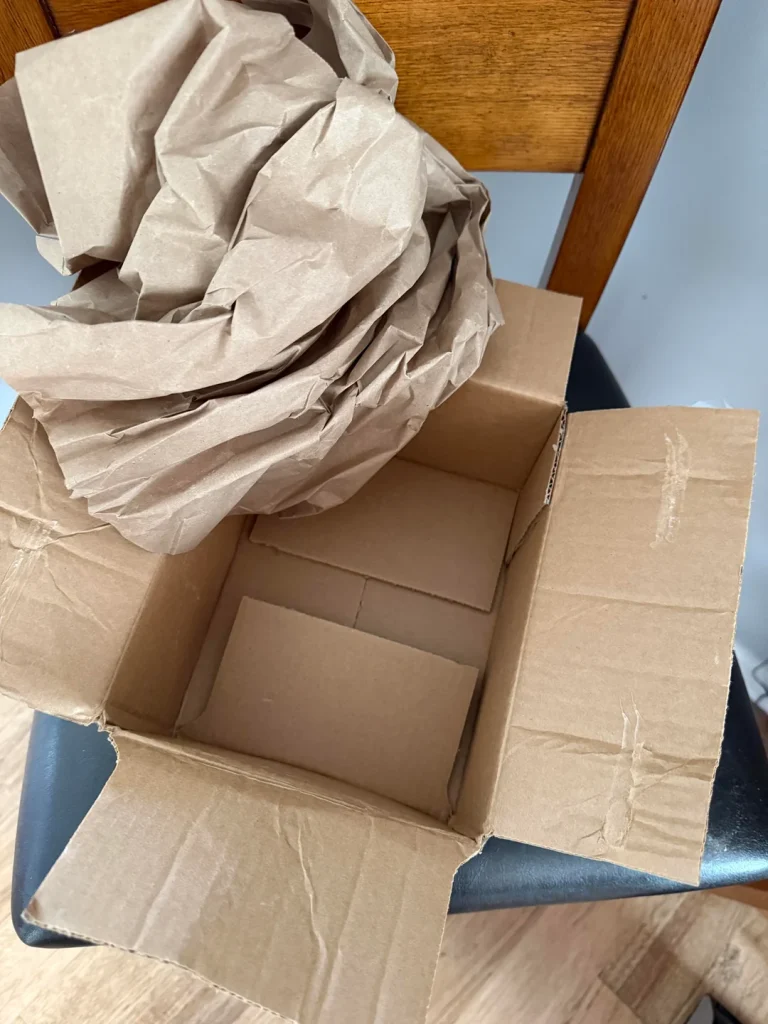
On paper, the order looks complete because tracking shows “delivered.” The scammer then waits for the 72-hour window to run out.
If you don’t report a problem in time, Mercari automatically rates the order and releases the money to the seller. Many buyers only notice the problem after that.
A related trick is the fake-goods listing. The seller uses stock photos of a real brand-name item, then ships a counterfeit.
Red Flags:
- The listing uses stock or catalog photos instead of real pictures.
- A brand-new seller has few or no reviews but sells high-value items.
- The package weighs much less than the item should.
What to Do:
Open every package the day it arrives, and record a video while unboxing expensive items. If anything is wrong, don’t rate. Start a return in the app before the 72 hours end.
4. The “Damaged Item” Buyer Scam
This one flips the script and targets sellers. A buyer receives your item, then claims it arrived broken or “not as described.”
Mercari approves the return, and the buyer sends back a package. But inside is a different, damaged, or fake version of your item. Some buyers send back an empty box.
Since Mercari often sides with buyers when proof is unclear, sellers can lose both the item and the payment. This is a top complaint in seller reviews.
Red Flags:
- The buyer has few ratings or a history of returns.
- They report damage right away but give vague details.
- They push for a refund without sending back the item.
What to Do:
Before shipping, photograph the item from every angle. Record serial numbers and note any small marks. When a return arrives, film yourself opening it, and contact Mercari right away if the item doesn’t match. Mercari may cancel a return if the buyer doesn’t ship it back with tracking within 7 days.
5. The Overpayment Scam
This scam targets sellers who are eager to close a sale. A “buyer” offers to pay more than your asking price through PayPal or Venmo. They often blame a gift, a mix-up, or a shipping cost.
Then they ask you to send back the extra money, or the “change.” You refund them from your own account.
Later, the first payment bounces, or the scammer files a chargeback saying the payment was unauthorized. You lose the refund you sent, and sometimes the item too.
Red Flags:
- The buyer offers to pay more than you asked.
- They want to pay outside the Mercari checkout.
- They send fake “payment confirmation” emails or screenshots.
What to Do:
Only accept payment through Mercari checkout. Mercari shows a sale in your account once it’s paid, so ignore any email or screenshot that claims otherwise.
Mercari Reviews: What Real Users Say
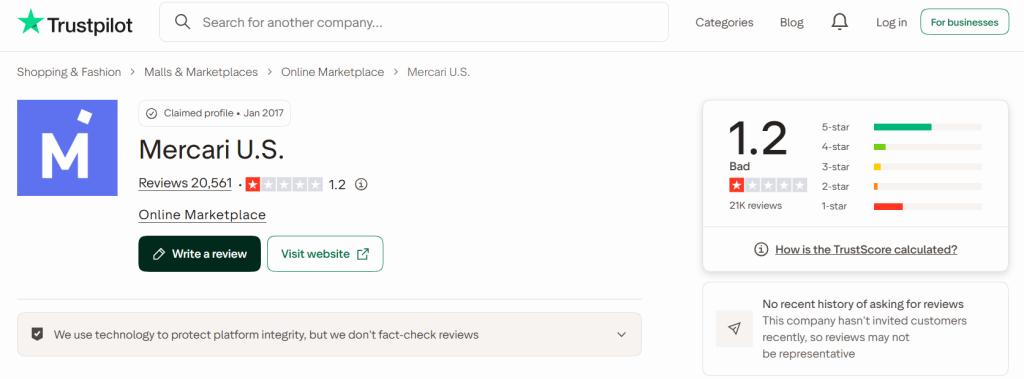
Mercari’s public ratings look bad at first glance. On Trustpilot, Mercari U.S. scores 1.2 out of 5 from about 21,000 reviews.
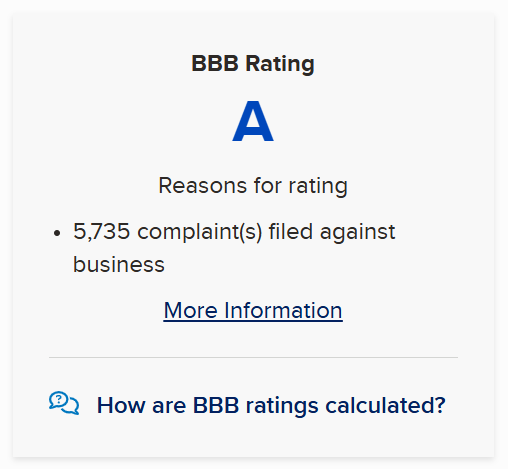
On the Better Business Bureau (BBB), Mercari is accredited. It has logged over 5,700 complaints in three years and holds an “A” BBB Rating.
The complaints repeat the same themes:
- Slow or scripted customer support
- Disputes that seem to favor buyers
- Sudden account suspensions
- Missed refunds because of the 3-day window
Keep this in context, though. Review sites mostly attract angry users, and eBay scores a similar 1.2 on Trustpilot. Meanwhile, Apple Store users rate the Mercari app around 4.8 stars.
Mercari Pros and Cons
| Pros | Cons |
| Free to list, with one flat 10% seller fee | Fee also applies to buyer-paid shipping |
| Money held until delivery (escrow) | Only 72 hours to report a problem |
| Sells almost every category, not just fashion | Support often feels automated |
| Prepaid labels include up to $200 protection | Sellers lose many unclear disputes |
| Instant Pay in about 30 minutes | US user growth has stalled in 2026 |
Mercari vs. Poshmark vs. eBay vs. Whatnot
On a simple $50 sale, Mercari leaves you with more money than eBay or Poshmark. The table uses item price only and standard seller accounts as of late 2026.
| Marketplace | Seller Fee | Fee on $50 Sale | You Keep | Buyer Protection Window |
| Mercari | 10% | $5.00 | $45.00 | 72 hours after delivery |
| Whatnot | 8% + 2.9% + $0.30 processing fee | $5.75 | $44.25 | Varies by issue |
| eBay (most categories) | 13.6% + $0.40 | $7.20 | $42.80 | 30 days (Money Back Guarantee) |
| Poshmark | 20% ($2.95 under $15) | $10.00 | $40.00 | 3 days after delivery |
Fees are only half the story, though. Each app has a different crowd:
- Mercari works well for mixed items like electronics, toys, home goods, and collectibles.
- Poshmark attracts fashion buyers, which can justify its higher fee on brand-name clothes.
- eBay has the biggest audience and auctions, but more complex fees.
- Whatnot suits live selling of cards, sneakers, and collectibles.
How to Sell Smarter on Mercari?
Most full-time resellers don’t pick just one marketplace app. They list the same item on several marketplaces to reach more buyers and sell faster.
That creates a new problem. If a sweater sells on Mercari, you must remove it everywhere else, or you risk selling it twice and paying a cancellation fee.
This is where a crosslisting + automation app like Sidekick Tools helps. It crosslists one listing to Mercari, Poshmark, eBay, Depop, Whatnot, Etsy, and Grailed, then delists the other copies once an item sells.
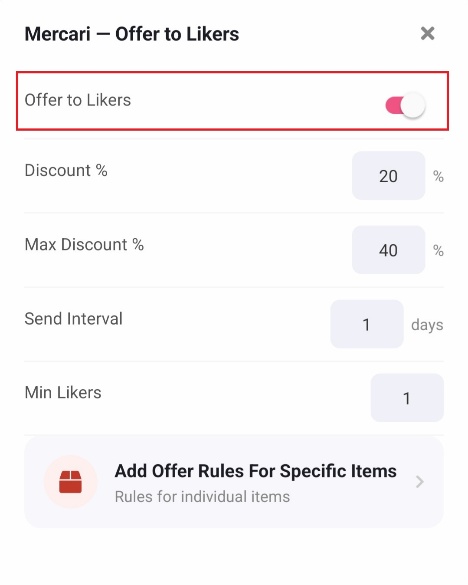
For Mercari, it can also send automatic offers to people who liked your item and relist stale listings. That saves hours of tapping each week.
A few more Mercari selling tips:
- Price with fees in mind. Divide your target payout by 0.9 to cover the 10% fee. Want $45 in hand? List at $50.
- Bundle-friendly pricing. Mercari now offers free shipping on qualifying same-seller orders of $50 or more, so bundles sell well.
- Ship within 3 business days. Fast shipping earns better ratings and more visibility.
- Photograph flaws clearly. Good photos are your best defense in a dispute.
Final Verdict: Is Mercari Legit?
Yes, Mercari is a legitimate marketplace. It is a public company with $810 million in US sales last fiscal year, escrow-style payments, and a clear fee system.
Its weak spots are real, though. The 72-hour window is short, support can feel robotic, and sellers often lose unclear disputes.
The safest way to use Mercari comes down to three habits. Keep every payment and message in the app, inspect items before you rate, and keep photo proof as a seller.
Follow those, and Mercari is one of the best places to buy and sell secondhand items in the US.
Frequently Asked Questions (FAQs)
Is Mercari a real company?
Yes. Mercari is a legit company. It was founded in Tokyo in 2013 and trades on the Tokyo Stock Exchange. Its US arm has run since 2014.
Does Mercari charge sellers a fee in 2026?
Yes. Mercari sellers pay a flat 10% of the item price plus buyer-paid shipping. Listing is free, and there is no separate processing fee.
Why do I have to pay an extra fee as a Mercari buyer?
That is the 3.6% Buyer Protection fee. It funds refunds, returns on qualifying items, and customer support.
How long do I have to return an item on Mercari?
You have 72 hours after delivery to report a problem. Rating the seller ends that window early.
How long does Mercari take to pay sellers?
The buyer must rate, or 72 hours must pass. After that, free direct deposit takes up to 5 business days, or Instant Pay takes about 30 minutes for $3.
Can you get scammed on Mercari?
Yes, mostly through off-app payments, fake support messages, and missed return windows. Staying inside the app prevents most of them.
Is Mercari better than Poshmark?
For sellers, Mercari’s 10% fee is half of Poshmark’s 20%. Poshmark often wins for brand-name clothing because of its fashion-focused buyers.