Skip to content


Selling your pre-loved items online has never been easier, with marketplaces like Depop and Poshmark leading the way for resellers.
These two popular marketplaces offer the convenience to sell clothing and other items that you no longer need.
Moreover, they also offer opportunities to single moms, college students, stay-at-home parents, and side hustlers to make money by reselling things online.
Now, if you are a reseller, you might be wondering which marketplace between Poshmark and Depop can bring you the most success and profits. Right?
Well, both Depop and Poshmark have millions of active users searching for everything from vintage items to pre-loved clothing.
However, both marketplaces attract different audiences and are also different when it comes to selling. Everything from the selling fees, listing process, and shipping vary significantly between these two reselling platforms.
So, before you start snapping photos of your items to sell, it’s worth understanding what makes each marketplace special.
In this Depop vs Poshmark guide, we will understand the two marketplaces from a seller’s perspective and help you decide which marketplace is actually better for you to start reselling.
What is Depop?
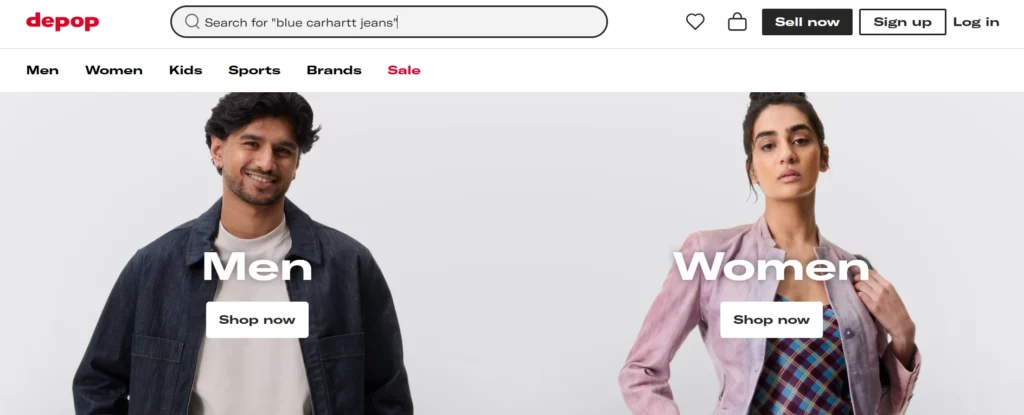
Depop combines social media with online shopping, creating a unique marketplace that appeals to young consumers.
This social commerce platform connects more than 56 million registered users across 150 countries who buy and sell clothing, accessories, and more.
What makes Depop stand out is its Instagram-like vibe that resonates with teens and young adults. Sellers can curate their shops similar to Etsy, to sell their items while building a following.
The platform’s origins mirror Etsy’s early days but with a distinctly modern, social-first approach that transforms shopping into a community experience.
What is Poshmark?

Poshmark is another popular social commerce platform where people buy and sell pre-loved and new fashion items.
With 130+ million users, mostly women between 18-35 years old, Poshmark is an online community for fashion lovers.
The marketplace is perfect for selling pre-loved clothing you no longer need, like that formal dress worn once to a wedding.
Similar to Depop, Poshmark combines social networking with online shopping, letting users browse, buy, and connect with other fashion enthusiasts in one convenient marketplace.
Also Read: How Profitable is Selling on Poshmark
Depop vs Poshmark (A Comparison from a Seller’s POV)
Depop vs Poshmark: Demographic

Depop is the undisputed marketplace for Gen Z, with over 90% of its 56 million users under the age of 26. These buyers shop for aesthetics and niche subcultures like Y2K, streetwear, and true vintage.

Poshmark serves a much larger audience of over 130 million registered users, primarily Millennials, Gen X, and Gen Z. They have more disposable income and specifically search for established brand names and luxury labels.
If you are selling a 1990s band tee, you will find your ideal buyer on Depop. However, if you have a pair of Lululemon leggings or a Coach bag, Poshmark is your best bet.
Data shows that Poshmark buyers are more likely to buy “mall brands” like Gap or J.Crew. Depop buyers often ignore these brands unless they fit a very specific, trendy “vibe.”
Depop vs Poshmark: What You Can Sell?

Apparel makes up roughly 60% of Depop’s total sales, with a heavy focus on vintage and handmade items. It is a creative marketplace where “one-of-a-kind” items outperform mass-produced fashion.
Poshmark has a much wider range of categories, including apparel, bags, fashion accessories, footwear, home decor, electronics, and pet supplies. You can sell a used air fryer and a designer dress in the same storefront.
Sellers with eclectic, thrifted finds that require “styling” should focus their energy on Depop. The audience there appreciates the effort of the modeled photos and artistic presentation.
Resellers with high-volume inventory from brands like Free People, Anthropologie, Madewell, Alo Yoga, or Nike should choose Poshmark. These items are searched for by name millions of times a day on the Poshmark app.
Depop vs Poshmark: Ease of Selling

Depop requires you to act like a social media manager to get consistent sales. You must use high-quality, Instagram-style photos and up to five relevant hashtags to appear in Depop search results.
Also, visibility on Depop is organic, meaning your “look” determines your success. It takes more time to curate a Depop shop, but it builds a stronger long-term brand.
Poshmark uses a “share” mechanism where you must manually “bump” your listings to the top of search results. This requires daily activity, but the app provides more structured tools for engagement.
Poshmark also offers “Posh Parties” and “Live Shows” which are great for selling large amounts of inventory quickly. These features make it easier to reach buyers without having perfect, professional product photography.
Depop vs Poshmark: Selling Fees

Depop is significantly lucrative for the reseller in 2026 because they removed their 10% selling fee. US sellers now only pay a payment processing fee of 3.3% plus $0.45.
This means on a $100 sale on Depop, you keep approximately $96.25. This low overhead makes Depop the best marketplace for protecting your profit margins on high-value items.
Want to know exactly how much you’ll take home after Depop fees? Use our Depop fee calculator to instantly calculate your profit before listing.
Poshmark, on the other hand, charges a flat 20% commission for all sales over $15. For items under $15, they take a flat fee of $2.95, which is quite high compared to Depop.
On that same $100 sale, Poshmark keeps $20, leaving you with only $80. You are paying a premium for Poshmark’s massive audience and their extremely simplified shipping.
Not sure how much profit you’ll make on Poshmark per item? Try our Poshmark fee calculator to see your real earnings after commission.
Depop vs Poshmark: Shipping

Poshmark offers the most reseller-friendly shipping in the industry with a flat-rate $6.49 USPS Priority Mail label. This label covers any package up to 5 lbs, making heavy items like boots very cheap to ship.
You never have to weigh a package or buy your own stamps on Poshmark. You simply print the prepaid label and use free Priority Mail boxes from the post office.
Depop uses a weight-based system that is better for very light items like t-shirts or jewelry. Shipping a small item that’s less than 4 oz will cost as little as $4.45, which attracts more budget-conscious buyers.
However, shipping heavy items on Depop is expensive and requires you to weigh every single item accurately. If you guess the weight wrong, you may have to pay the difference out of your own pocket.
Depop vs Poshmark: Payments & Getting Paid

Poshmark uses an escrow-style system where they hold your funds until the buyer receives and “accepts” the item. If the buyer is silent, the funds are released automatically three days after the order delivery.
This can be frustrating if you need cash fast, but it provides high security against scams. Once released, you can transfer the money to your bank for free via direct deposit.
Depop Payments are typically initiated two business days after the item is delivered, if you’ve chosen Depop Shipping. This is often faster than Poshmark because you don’t have to wait for the buyer to click a button.
Both marketplaces offer clear sales reports that make tax season much easier for professional resellers. For consistent cash flow, Depop usually gets the money into your bank account a little sooner.
Depop vs Poshmark: Seller Support

Poshmark provides excellent seller protection through “Posh Protect,” which covers you if a buyer tries to claim an item is fake or damaged. They act as a formal mediator and usually side with the seller if he has photos of the item with proof of authenticity.
Also, the Poshmark support team is responsive, and they handle all sales tax collection and remittance for you. This saves you hours of administrative work every month.
Depop’s support is mostly email-based and can feel a bit more “hands-off” for the seller. You are responsible for setting your own return policies and communicating directly with difficult buyers.
If a dispute arises, you must provide clear proof of postage and photos to Depop’s team. While they do offer protection, the process is less automated than Poshmark’s built-in protection.
Pros & Cons of Selling on Depop
| PROS | CONS |
|
Zero Selling Fees: In major markets (US/UK), Depop removed its 10% commission. You only pay a standard payment processing fee (~3.3% + $0.45), leaving more profit in your pocket.
|
Non-Binding Offers: Buyers can send offers that you “accept,” but they aren’t forced to pay. You will frequently deal with “ghosting” after agreeing to a price. |
|
High Margin for Trends: Because the audience is younger and trend-focused, “cool” vintage or Y2K items often sell for 20–40% more than they would on eBay or Vinted.
|
Algorithm “Babysitting”: To stay visible, you must manually “refresh” your listings (edit and save) or post new items daily. If you go inactive for 3 days, your views often drop to zero. |
|
Buyer-Paid Protection: Depop now charges buyers a “Marketplace Fee” for protection, which technically covers the cost of the platform so you don’t have to.
|
“Lowball” Culture: Because of the young demographic, you will regularly receive offers for 50–70% off your asking price, even on already cheap items. |
|
Mobile-First Workflow: The app is designed for speed. You can take photos, record a video “vibe” check, and list an item in under 60 seconds directly from your phone.
|
Difficult Shipping for Bulky Items: Unlike Poshmark’s flat-rate shipping (up to 5lbs), Depop’s shipping is tiered. Selling heavy boots or coats can be very expensive for the buyer. |
|
Video Integration: Depop’s native video support allows you to show fabric movement and flaws clearly, which significantly reduces “item not as described” disputes.
|
|
|
Brand Building: The “Social” aspect (Followers/Likes) allows you to build a loyal customer base that gets notified every time you drop new inventory. |
Pros & Cons of Selling on Poshmark
|
PROS |
CONS |
|
Dead-Simple Shipping: Buyers pay a flat rate (~$8.27) for up to 5 lbs. You can ship heavy coats or boots in any USPS Priority box without ever weighing the package. |
Highest Fees in the Industry: Poshmark takes a flat 20% commission on sales over $15 (or $2.95 for items under $15). This is significantly higher than Depop’s 0% or eBay’s ~13%. |
|
“Binding” Offers: Unlike Depop, when you accept a buyer’s offer on Poshmark, the sale is final and charged immediately. No ghosting or waiting for payment. |
The “Sharing” Grind: To stay at the top of search results, you must manually “share” your own listings several times a day. Without a Posh bot or heavy manual labor, your sales will stall. |
|
Bundling Culture: Poshmark has the best built-in tool for buyers to purchase 3–5 items at once for a single shipping fee, which is a massive way to move lower-value “mall brands.” |
Shipping “Tax” on Light Items: Because shipping is a flat $6.49, it is extremely difficult to sell a single $10 T-shirt or a piece of jewelry; buyers won’t be paying $8 shipping for a tiny item. |
|
Massive Audience (Millennial/Gen X): Poshmark skews older and has higher “buyer intent.” People go there specifically to find a certain brand (e.g., Lululemon, Madewell, Patagonia) and pay quickly. |
Aggressive Lowballing: Poshmark’s culture is built on “Offers.” If you list an item for $50, expect many offers for $15–$20. You have to price your items 20–30% higher just to leave room for the “deal.” |
|
Posh Protect (Escrow): Poshmark acts as a middleman. They hold the money until the buyer receives the item, protecting you from credit card chargebacks and common “scam” refunds. |
Slow Payouts: You don’t get paid until the buyer “accepts” the order or 3 days pass after delivery. If the order delivery gets late, it can take 10+ days to see your money. |
|
Hands-Off Returns: Poshmark handles all customer service disputes. If a buyer wants a return, they have to prove the item is “Not as Described” to Poshmark staff, not you. |
Is It Better to Sell on Poshmark or Depop?
Look, if we’re being real, the Poshmark vs Depop debate is actually a trap!
Most marketplace resellers in 2026 have stopped picking sides and started selling everywhere. If you only list on one marketplace, you’re essentially leaving money on the table.
Poshmark is a great marketplace for reselling luxury and designer brands. Its flat-rate shipping makes sending big boxes easy, even though the 20% fee is quite high.
Depop is the ideal marketplace for vintage items and cool streetwear styles. You keep more profit there because they removed selling fees, but buyers often ghost after making offers.
Since each marketplace attracts different shoppers, listing on both ensures you never miss a sale. You can maximize your profit on Depop while enjoying the fast sales pace of Poshmark.
To save time, you should use the Sidekick Tools app, which cross-lists your items from Poshmark to Depop and vice versa. Also, it helps you manage your inventory seamlessly across 7 marketplaces.
The app also automatically deletes an item once it sells, so you never sell the same item twice. This approach gives you more freedom and helps you grow your reselling business much faster.