Skip to content


Does Mercari Sell Fake Items? That was the first question I typed into Google before I ever downloaded the Mercari app to start shopping.
I had my eye on a vintage designer jacket that looked way too good to be true, and I was terrified of being scammed.
Shopping on Mercari feels like a treasure hunt where the prizes are real, but the traps are everywhere. You are not buying from a brand; you are buying from a person in his living room.
Because of this, I decided to do some deep digging into how Mercari actually works to keep buyers safe. I spent hours reading Mercari’s policies and testing the app myself to find the truth about fake items on Mercari.
Does Mercari Sell Fake Items?
The short answer is that Mercari itself does not sell anything because it is just a marketplace. Think of it like a digital flea market where Mercari provides the tables and the roof for everyone.
While Mercari has strict rules against selling fakes, some sellers still try to sneak fake items onto the marketplace app. I have seen everything from fake handbags to “unbranded” electronics that look exactly like the real thing.
It is important to understand that Mercari is an online marketplace, which means anyone with a phone and a Mercari account can list an item. This openness is why the deals are so good, but it is also why fakes exist.
Mercari uses AI monitoring and user reporting to scan for items that look fake or counterfeit. However, with millions of items listed every day, no system is 100% perfect at catching every single fake.
Are There a Lot of Fakes on Mercari?
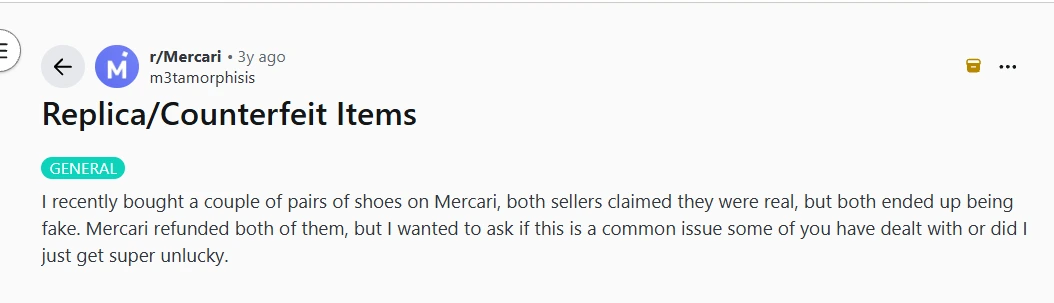
In my experience, you will find more fakes in categories like luxury fashion, designer handbags, streetwear, and branded sneakers on Mercari. Scammers love to target brands like Louis Vuitton, Nike, and Gucci because the profit margins are huge.
If you are looking for a used toaster or a vintage board game, you probably won’t run into many fakes on Mercari. Nobody is out there making “bootleg” versions of common household items that don’t have a high resale value.
Also, I have noticed that fakes tend to pop up in waves whenever a specific item becomes trendy or hard to find. For example, when a certain designer bag goes viral on social media, the number of “replicas” on Mercari usually spikes.
While there are fakes on Mercari, they do not represent the majority of what you see while browsing. Most sellers on Mercari are just regular people trying to clean out their closets and make a little extra cash.
Does Mercari Allow Replicas?
I checked the fine print, and Mercari’s authenticity guidelines are very clear: they have a zero-tolerance rule for replicas and imitations. Mercari specifically bans listing of items that in any way are not authentic.
Even if a seller is honest and says, “This is a replica,” Mercari will still take the listing down. They do not want the marketplace to become a hub for “dupes” or “knock-offs” because it hurts their reputation.
I have seen fake listings get deleted in minutes on Mercari because the seller used a brand name in the title for an unbranded item. This is called “keyword spamming,” and Mercari treats it as a serious violation of their rules.
Mercari takes items’ authenticity seriously because selling fakes is actually illegal in most places, and they want to stay in business. They would rather delete a few real items by mistake than let a flood of fakes take over the app.
Does Mercari Authenticate Items?
Yes, Mercari has a program called Mercari Authenticate, which authenticates items to give buyers an extra layer of peace of mind.
For high-end items like luxury handbags and watches, Mercari partners with professional third-party authentication services like Real Authentication.
When you see a little “diamond” badge on a listing, it means a pro has looked at detailed photos of the item. These experts check the stitching, the logos, the serial numbers, and even the hardware to make sure the item is real.
If a seller wants that badge, they have to pay a small $5 fee and submit very specific photos for authentication review. I always look for this badge first when I am planning to spend more than a couple of hundred dollars.
Also Read: Mercari Vacation Mode: How It Works?
Is Everything on Mercari Authentic?
I have to be honest with you: despite the strict guidelines that prohibit fakes, not every single item on the Mercari app is authentic.
You will likely find many luxury items on Mercari that haven’t gone through Mercari Authenticate. If a seller doesn’t opt in for the $5 authentication fee, the item hasn’t been verified by a pro.
This means the responsibility for checking the item’s authenticity falls on you, the buyer, especially for lower-priced “luxury” goods. I never assume something is real just because it is listed on the app; I always verify it myself.
It is a “buyer beware” world out there, so you have to keep your guard up. Being a smart buyer means knowing that Mercari is a legit marketplace, but you still need to keep your eyes open.
Can I Trust Buying from Mercari?
I personally trust Mercari more than most local classified sites because of how they handle your money. When you buy something, Mercari holds the money in “escrow,” which means the seller doesn’t get paid right away.
The seller only gets their money after you receive the item and “rate” them, or after three days have passed. This gives you a window of time to inspect the item and make sure it is exactly what you paid for.
I feel safe knowing that if I open a box and find a plastic “Rolex,” I can stop the payment process immediately. This system puts the power in the buyer’s hands, which makes scammers very nervous about using Mercari.
Trusting Mercari isn’t just about trusting the sellers; it is about trusting the “Buyer Protection” program they have built. As long as you stay within the Mercari app and follow the rules, you are well-protected from scams.
How to Spot Fake Sellers on Mercari?
To find the best deals, I had to learn how to spot fake sellers on Mercari before they could take my money.
While most sellers on Mercari are honest, scammers use specific patterns that are easy to see once you know what to look for.
I look at every listing like a detective would, checking for clues that the person on the other side isn’t being real.
Here are the four major red flags I use to filter out the fakes and keep my buying experience on Mercari safe.
1. Beware of Prices That Seem Impossible
The first thing I always check for a fake item on Mercari is the price, because scammers love to use “bait” to catch your attention quickly.
If I see a brand-new $2,000 designer handbag listed for only $200, I immediately know something is very wrong with the item.
Nobody is going to give away thousands of dollars in profit just to be nice to a stranger on the internet.
Scammers set these low prices to create a sense of urgency, hoping you will buy it fast without thinking it through.
They want you to feel like you are winning a “once-in-a-lifetime” prize, so you ignore the obvious signs of the item being fake.
Always compare the price to other sold listings on the Mercari app to see what the “market value” for that item actually is.
If the price is more than 50% lower than every other listing, it is almost certainly a fake or a total scam.
2. Check the Seller’s Profile
After checking the price, I head straight to the Mercari seller’s profile to see who I am actually dealing with.
A seller with zero ratings and a brand-new account created just a month ago is a massive red flag for high-value items.
I get especially worried if that new Mercari seller has listed ten “brand new” luxury handbags at once.
Real collectors or sellers usually have a history of smaller sales before they list something worth thousands of dollars.
I also look at their “About” section and their “Badges” to see if they have verified their phone number, email, and government ID.
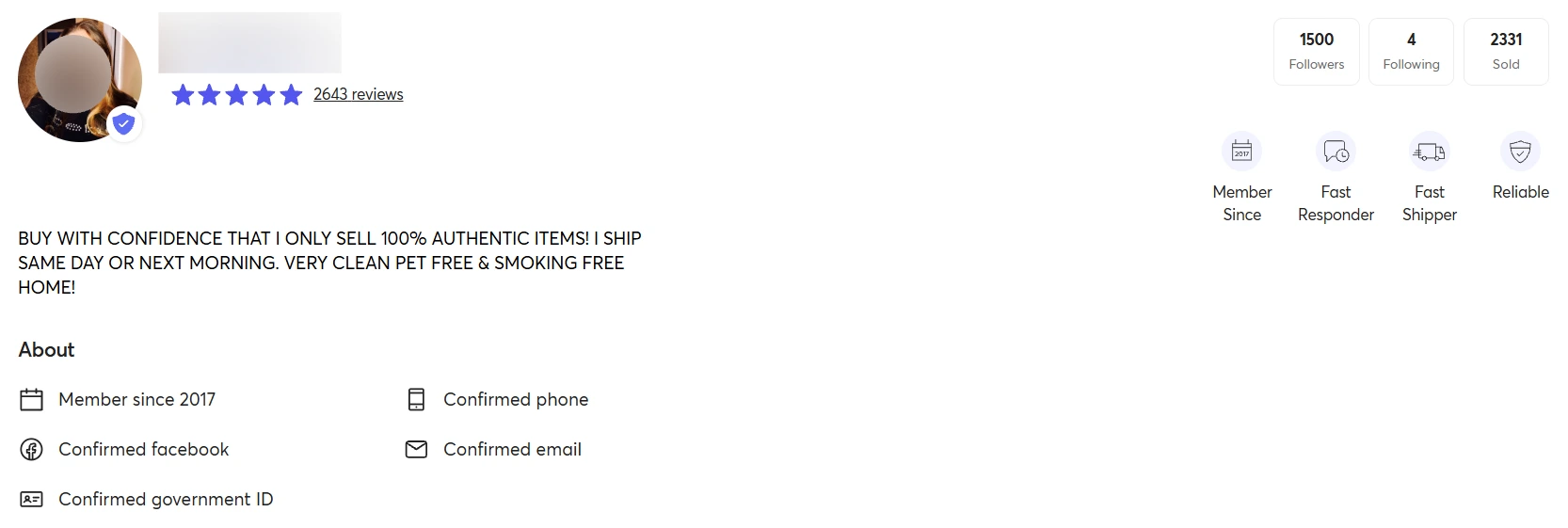
If a seller has 100 five-star reviews for selling $10 shirts, I feel much safer buying a more expensive item from them.
Fake sellers on Mercari usually create “burnable” accounts that they delete as soon as they trick someone into a fake sale.
3. Demand Actual Photos of the Item
The photos in a listing tell a story, and I make sure that story isn’t just a collection of “stock photos.”
If a Mercari listing only uses photos from the brand’s official website, I assume the seller doesn’t actually have the item.
I always look for “real-life” photos taken on a carpet, a table, or a bed, which shows the item is in their house.
If I am still unsure, I ask the seller for a “tagged photo” to prove they aren’t just stealing pictures from Google.
A tagged photo is a picture of the item with a piece of paper next to it that has the seller’s name and today’s date.
A real seller will be happy to take a quick photo to make a sale, but a scammer will usually make up an excuse.
4. Watch for Coded Language
I have learned to read between the lines of item descriptions to find “hidden” admissions that an item is fake.
Sellers who sell fake items on Mercari often use “code” phrases like “price reflects authenticity” because they don’t want to get banned for lying.
This phrase is a sneaky way of saying, “This is a fake, and I’m selling it cheap because it isn’t the real thing.”
I also stay away from Mercari listings that say “don’t ask if it’s real” or “bought as a gift, not sure of origin.”
These sellers are trying to protect themselves from being reported while still hoping you will be foolish enough to buy.
A genuine Mercari seller will usually be proud of where he bought the item and might even offer to show you a receipt.
If the description is only one sentence or is full of broken English and weird symbols, I hit the back button immediately.
How to Report Fake Listings on Mercari?
If I stumble upon a listing that is clearly a fake, I don’t just ignore it; I report it to help the community. Reporting is very simple on Mercari and only takes about ten seconds of your time.
First, tap on the listing and look for the little “flag” icon in the top right corner. From the menu that pops up, select “Report” and then choose the reason you’re reporting it.
Next, hit the “Submit” button and then hit “Yes” to confirm. Once you hit the “Yes” button, Mercari’s moderation team will review the listing and take it down if they agree.
Will Mercari Refund Me If I Receive a Fake Item?
Yes, Mercari will refund you if you receive a fake, but there is a catch. You must file a return request within three days (72 hours) of the item being delivered to your door.
I cannot stress this enough: do not rate the seller if you think the item might be a fake. Once you rate the seller on Mercari, the transaction is “closed,” the money is released, and getting a refund becomes almost impossible.
When you open a return request for a fake item, Mercari will ask you to provide photos and evidence of why it’s not real. I usually take clear, close-up photos of the bad stitching or the incorrect labels to prove my point to them.
If they agree with you, they will provide a pre-paid shipping label so you can send the item back to the seller. Once the tracking shows the item is on its way back, Mercari will process your full refund to your original payment method.