Skip to content


If you’ve spent any time in reselling communities lately, you’ve heard the question: Does Whatnot sell fakes?
I’ve been reselling for years, and I buy sourcing inventory on Whatnot too.
When I kept seeing horror stories about receiving counterfeit Pokémon cards and fake designer bags on Whatnot, I decided to dig in myself.
Here’s the short answer: Whatnot doesn’t sell anything directly, but fakes have absolutely slipped through on the platform.
However, the longer answer matters a lot more, especially if you’re a seller. So, let’s get into it.
How Whatnot Actually Works?
Whatnot is a live-shopping marketplace. Individual sellers run livestreams and auction off items in real time, and buyers bid from their phones.
That’s the key detail most people miss. Whatnot is the venue, not the vendor.
When you buy a “vintage Chanel” or a “PSA 10 Charizard,” you’re buying from an individual seller, not from Whatnot itself.
So the real question isn’t “does Whatnot sell fakes?”
It’s “does Whatnot let sellers get away with selling fakes?”
That’s where things get interesting!
What is Whatnot Official Policy About Fakes?
I read through Whatnot’s counterfeit policy so you don’t have to. On paper, it’s strict.
Whatnot bans the listing, sale, or even giveaway of counterfeit items. Sellers are responsible for proving their items are authentic, and that applies even if a seller openly admits an item is counterfeit.
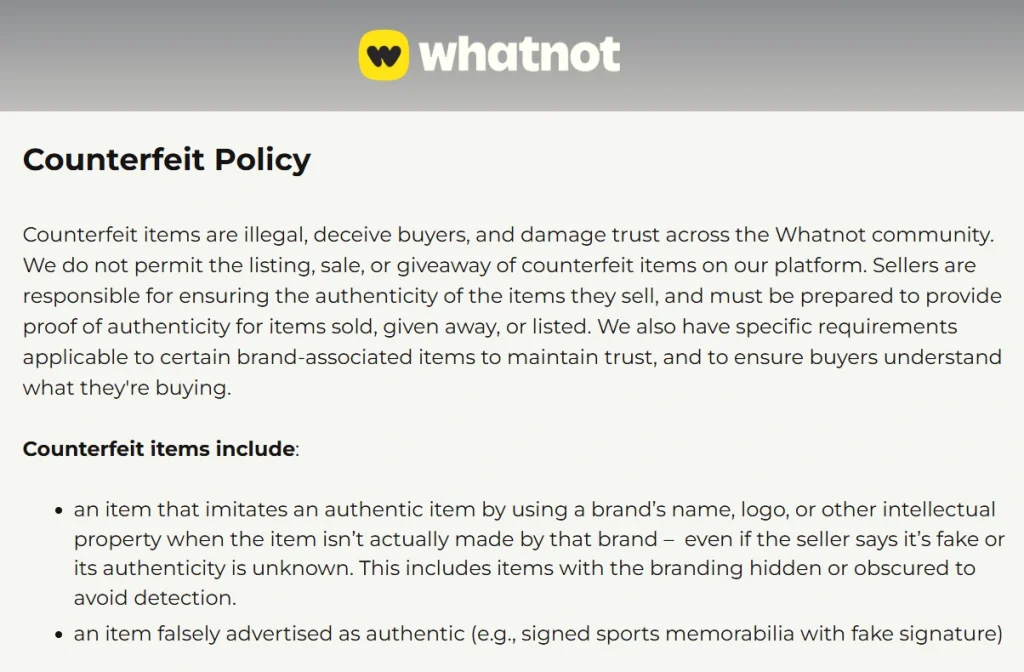
Whatnot also gives buyers a 30-day window to report a suspected fake through the Purchases tab in the app.
If Whatnot’s team confirms the item isn’t authentic, the buyer gets a full refund. In some cases, Whatnot refunds buyers even before authenticity is fully confirmed.
For certain high-risk categories, like luxury handbags and pricier collectibles, Whatnot adds extra brand-item requirements and review steps. That’s a real improvement over the platform’s early days.
But here’s my honest take as a reseller: a policy is only as good as its enforcement. And that’s exactly what Whatnot buyers on Reddit have been saying.
Also Read: Is Whatnot Legit?
What Real Buyers Are Saying on Reddit?
Spend ten minutes on r/whatnotapp, and you’ll see the pattern for yourself.
I’m linking a few threads here, but I’d encourage you to browse the subreddit directly, because you’ll find new posts appear constantly.
New complaints are posted regularly, but most counterfeit-related discussions fall into three categories:
1. Fake Trading Cards
Trading cards appear to be one of the most frequently discussed counterfeit categories on Whatnot.
Whatnot buyers repeatedly report purchasing Pokémon, sports, and other collectible cards that look convincing during a Whatnot livestream but are clearly fake once they arrive.
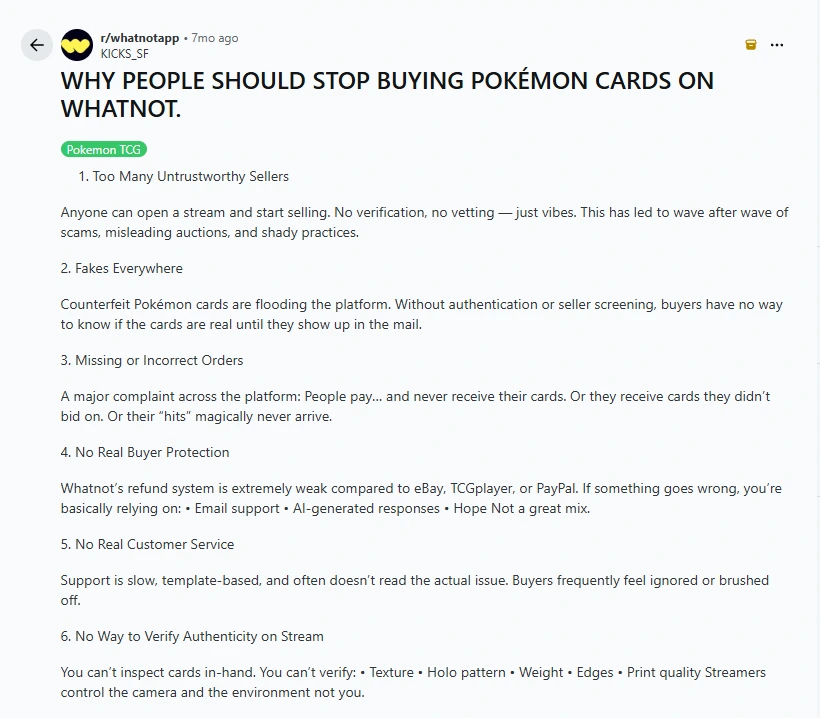
Common warning signs mentioned by Whatnot buyers include incorrect card dimensions, faded backs, poor print quality, missing texture, unusual foil patterns, thin cardstock, and colors that do not match real trading cards.
Some Whatnot buyers described trading cards as feeling more like ordinary printer paper than collectible card stock.
Others become suspicious when a card fails a light test or looks noticeably different beside a confirmed authentic copy.
Live auctions on Whatnot make these problems harder to spot. The seller may hold a card up for only a few seconds while viewers compete against a countdown.
Buyers cannot inspect the surface, edges, centering, texture, or back of the card as carefully as they could when shopping in person.
A low selling price is not proof that a trading card is fake. However, an unusually valuable trading card combined with poor camera quality, limited close-ups, and a seller who avoids questions should make Whatnot buyers more cautious.
Some Whatnot buyers also complain about receiving a mix of genuine and counterfeit cards.
That makes the problem more difficult because receiving several authentic cards may give the buyer confidence in the entire shipment.
A fake card might not be discovered until the buyer compares it with another copy, sends it for grading, or attempts to resell it.
2. Questionable “Designer” Items
Luxury handbags, wallets, sneakers, streetwear, and branded accessories form the second major category of complaints on Whatnot.
Many Whatnot buyers describe winning items in Whatnot auctions presented as authentic, only to become suspicious after inspecting the stitching, logos, hardware, materials, serial numbers, or date codes.
In some cases, buyers also say a third-party authentication service later classified the item as counterfeit.
One Reddit user described disputing a Chanel bag after a specialist authenticator rejected it, while Whatnot’s own inspection reportedly reached a different conclusion.

Suspiciously low prices are another recurring concern. A luxury item occasionally sells below market value because of damage, limited demand, an inexperienced audience, or a seller who needs quick cash.
However, a supposedly valuable item selling for a tiny fraction of its normal resale price requires additional scrutiny on Whatnot.
Many Whatnot buyers also mention seller behavior as a warning sign. Examples include refusing to show serial numbers, avoiding close-up views, rushing past questions about authenticity, or blocking viewers who request additional proof.
One Reddit discussion began after a shopper was allegedly blocked simply for asking to see a purse’s serial number.

The safest approach is to research the seller before bidding, read recent reviews, save screenshots of the listing, and record any authenticity claims made during the livestream.
Whatnot Buyers should also understand that certificates of authenticity are not automatically reliable.
Whatnot buyers on Reddit regularly argue that documents and authentication cards can also be copied or misrepresented.
3. Refund Friction
Reddit feedback about Whatnot’s refund process is mixed.
Some Whatnot buyers report receiving a full refund after submitting evidence that an item was fake.
One Whatnot buyer on Reddit said he got a refund after returning a fake card and still continued using the Whatnot app because his other purchases had been legitimate.
Other buyers describe a slower and more demanding process. They report being asked for multiple photographs, comparison images, written authentication results, packaging evidence, or proof from a qualified third party.
In some cases, Whatnot buyers say they were instructed to mail the disputed card or item to Whatnot for inspection before reimbursement could be approved.
This creates a frustrating situation for buyers who believe the counterfeit is obvious. Paying for professional authentication feels unreasonable when the card is the wrong size or a bag has clear manufacturing errors.
The process becomes even more stressful when hundreds of dollars are tied up while the buyer waits for a decision.
One Whatnot buyer described being refunded only after an extended process in which the item was sent for review, and its authenticity could not be confirmed.
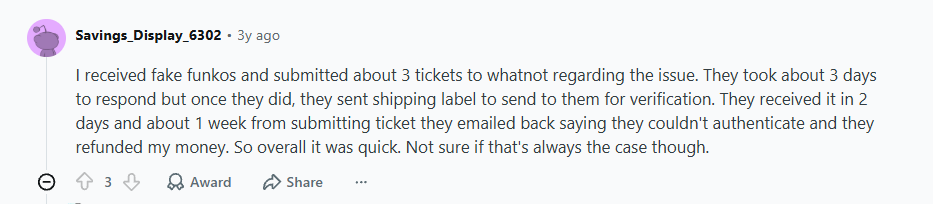
Another major complaint is that sellers sometimes appear to remain active after buyers report receiving counterfeit items.
A refund solves the buyer’s immediate financial loss, but it does not fully restore confidence when the same Whatnot user continues hosting auctions.
Buyers naturally question whether their complaint led to any investigation or consequences.
There is another side to the issue. Whatnot sellers also report dishonest buyers submitting false claims, replacing genuine items with fake ones, or requesting refunds while keeping the original item.

These disputes help explain why Whatnot require detailed evidence instead of approving every claim automatically.
The overall message from Reddit is not that every Whatnot seller is dishonest. Many users say they have bought authentic products and found trustworthy sellers.
The lesson is that Whatnot buyers should treat livestream purchases on Whatnot with the same caution they would use on any resale marketplace.
Why Fakes Slip Through on Whatnot?
None of this means Whatnot is a scam. It means the live-auction format creates risks that static marketplaces don’t have.
Think about it. On Poshmark or eBay, you can zoom into photos, check serial numbers, and research for days before buying.
On a Whatnot livestream, you have seconds to decide while an auction timer counts down.
Counterfeiters know this. Fast-paced hype, low starting bids, and grainy stream quality are the perfect cover for a fake.
You literally cannot inspect stitching or card texture through a phone camera at auction speed.
Add in the fact that anyone can apply to sell, and you get a marketplace where most sellers are honest, but the dishonest ones have ideal conditions.
How Can I Protect Myself as a Buyer on Whatnot?
Vet the Seller Before You Bid
Before bidding, I study the Whatnot seller rather than relying on one impressive rating.
I check the number and recency of reviews, sales history, listed inventory, and whether buyers repeatedly mention authenticity, packaging, or item condition.
A high rating based on only a few orders tells me less than hundreds of detailed reviews.
I also search the seller’s username on Reddit, Google, and collector groups, adding terms such as “fake,” “counterfeit,” “refund,” or “scam.”
One angry post is not proof, but repeated complaints describing the same behavior are a serious warning.
I also watch part of a live show before buying to see how clearly the seller answers questions and presents items.
Be Suspicious of “Too Good” Prices
I do not treat a low opening bid as automatic proof of fraud.
However, an unusually low final price on a rare, sealed, or frequently counterfeited item makes me slow down and investigate.
I compare recent sold prices, confirm the exact edition, and decide whether the deal makes financial sense.
I become especially cautious when a bargain price is combined with poor lighting, vague descriptions, stock photos, rushed bidding, or statements such as “I don’t know much about this.”
Before entering a Whatnot auction, I set a maximum bid based on verified market value rather than the energy of the livestream.
A cheap item is not a bargain when its authenticity, condition, or origin cannot be reasonably established.
Ask Questions During the Live Show
Whatnot livestreams give online buyers an advantage, but only when they use it.
I ask the Whatnot seller to show the exact item being auctioned, not another example.
For cards, I request close-ups of the surface, edges, corners, back, serial number, and suspected damage.
For luxury goods, I ask to see date codes, stitching, hardware, labels, interiors, and included receipts or certificates.
I also ask the seller to state flaws clearly before I bid.
Whatnot requires sellers of used luxury goods to disclose and show material flaws, so evasive answers deserve attention.
Moreover, I take screenshots of important claims and leave when a seller refuses reasonable requests, changes the subject, or creates unnecessary urgency.
Inspect Order Immediately and Report Within 30 Days
I inspect every Whatnot order as soon as it arrives, especially cards, sneakers, collectibles, electronics, and designer goods.
I record the unopened parcel, shipping label, packaging, and complete unboxing in one continuous video.
I then take sharp photographs of the item from several angles. Video provides useful supporting evidence, while Whatnot specifically requests clear, detailed photos when reviewing suspected counterfeits.
If an item is damaged, incorrect, materially different, or potentially fake, I keep all packaging and report the problem to Whatnot.
Counterfeit refund requests must currently be submitted within 30 days of receiving the order. I avoid cleaning, altering, reselling, or discarding the item during the investigation.
Get a Second Opinion on Luxury Items
For expensive handbags, sneakers, watches, jewelry, or streetwear, I budget for independent authentication before bidding.
I choose an authenticator experienced with the exact brand and product category, then confirm what evidence the service provides, such as a written result, certificate number, detailed photographs, or an explanation of failed authenticity points.
The cheapest opinion is not always the strongest evidence, so I research the authenticator’s reputation and whether Whatnot recognizes its reports.
Moreover, I request fast authentication because an outside review does not pause Whatnot’s claim deadline.
If concerns arise, I preserve the report, receipt, listing details, screenshots, and unboxing evidence. I then report the order through Purchases instead of arguing only with the seller.
Why This Matters Even More for Sellers?
Now let’s flip to the side I care about most: the seller’s perspective.
A lot of resellers, including plenty of Poshmark and eBay sellers, use Whatnot as a sourcing channel.
Live auctions are a goldmine for underpriced bundles and mystery lots. But if a fake sneaks into your inventory, the damage lands on you.
Here’s what’s at stake:
Your Poshmark/eBay account
Both Poshmark and eBay prohibit counterfeit sales, full stop. “I didn’t know it was fake” is not a defense.
If a buyer reports your listing and it’s confirmed inauthentic, you’re facing removed listings, held funds, or a permanent ban.
Your Reputation
In online reselling, trust is the whole business. One counterfeit complaint in your reviews can tank conversion on every future listing.
Your Money
If you miss Whatnot’s 30-day reporting window because the item sat in your death pile, you eat the loss.
I’ve learned to authenticate sourced inventory the day it arrives, not the day I list it.
My rule as a reseller is simple: never list what you can’t verify.
If I can’t confidently authenticate a category, whether that’s graded cards, luxury bags, or limited sneakers, I either pay for authentication or I skip the flip entirely.
Does Whatnot Sell Fakes?
Whatnot itself doesn’t sell fakes, and it genuinely doesn’t want them on the platform. Counterfeits hurt its business as much as yours.
But do fakes appear on Whatnot? Yes, without question. Reddit threads, buyer reviews, and reseller forums document it repeatedly, especially in trading cards and designer items.
Whatnot’s counterfeit policy and 30-day refund protection give buyers a real safety net. Just remember that the net only works if you use it: inspect fast, document everything, and report immediately.
If you’re a seller sourcing on Whatnot, treat every live auction win as “unverified until proven authentic.”
Buy smart, verify everything, and the deals on Whatnot can still work in your favor. Skip those steps, and you’re gambling with your reselling business.