Skip to content


I still remember my first Poshmark sale. It was a pair of barely-worn Madewell ankle boots that had been sitting in my closet for two years.
They sold at 11 p.m. on a Tuesday for $38. I did a little happy dance in my kitchen, printed the label, and I was hooked.
Since then, I’ve listed hundreds of items, made every rookie mistake in the book, and slowly figured out how to sell on Poshmark.
Let me tell you one thing: selling on Poshmark is easy, but selling consistently on Poshmark takes strategy.
Anyone can snap a few photos of an item and hit the “List” button. But if you want steady sales on Poshmark instead of crickets, you need to understand how Poshmark really works and how the Poshmark algorithm decides who gets seen.
That’s exactly what I’m going to walk you through in this “how to sell on Poshmark” guide. So, let’s begin.
Key Takeaways
- Listing on Poshmark is 100% free. You only pay when you sell: a flat $2.95 on sales under $15, or 20% on sales of $15 and up.
- Photos decide your sales. Bright, clear cover shots get the click. Poshmark gives you up to 16 photos and a video per listing, so use them.
- The Poshmark algorithm rewards activity. Sharing your closet, sending offers to likers, and relisting stale items keep you visible in search.
- Speed sells. Fast responses, fast shipping, and fast counteroffers turn shoppers into buyers and buyers into repeat buyers.
- Consistency beats hustle. Top Poshmark sellers don’t grind for hours a day. They automate the repetitive stuff (sharing, offers, relisting) with tools like Sidekick Tools and spend their time sourcing and listing instead.
What Is Poshmark, and Why Should You Sell There?

Poshmark is a social marketplace where people buy and sell fashion, accessories, and home goods.
With approximately 130 million registered users globally, Poshmark is one of the best marketplaces for resellers in 2026.
But here’s what makes Poshmark different from eBay or Etsy: it’s social at its core.
Buyers on Poshmark follow closets they love. Sellers share each other’s listings. There are virtual “Posh Parties” happening throughout the day where themed items get extra exposure.
That social layer changes everything about how you sell online.
On eBay, a great listing can sit passively and still sell. On Poshmark, visibility is something you actively earn through engagement.
The good news? Once you understand that, you have a real advantage over the millions of sellers who list an item once and wonder why it never sells.
And the timing has never been better!
Secondhand fashion keeps growing year after year, driven by Gen Z and Millennial shoppers who care about sustainability and love a good deal. Those shoppers are already on Poshmark, wallet in hand, waiting for you to list pre-loved items.
Poshmark Fees Explained: What You’ll Actually Take Home
Before you list your first item on Poshmark, you need to understand the math. I’ve seen many new Poshmark sellers get an unpleasant surprise on their first payout.
Poshmark’s selling fee structure is incredibly simple. There are no listing fees, no monthly subscriptions, and no separate payment processing charges. You pay one commission, and only when something sells:
- Sales under $15: a flat fee of $2.95
- Sales of $15 or more: Poshmark takes 20%, and you keep 80%
Let me show you what that looks like in real dollars.
Example 1:
You sell a t-shirt for $12. Poshmark takes $2.95. You pocket $9.05. Notice that on a $12 sale, that flat fee works out to almost 25%, which is why smart sellers avoid pricing items just under $15.
Example 2:
You sell a dress for $50. Poshmark takes $10 (20%). You keep $40.
Example 3:
You sell a designer bag for $200. Poshmark takes $40. You keep $160.
Here’s the part beginners often miss: that 20% covers more than you’d think. It includes payment processing, seller protection, and customer support.
Shipping is also simpler than on most platforms. The buyer pays a flat shipping fee, and Poshmark emails you a prepaid, pre-addressed USPS Priority Mail label for packages up to 5 pounds. You never pay for standard shipping out of pocket.
Poshmark even handles sales tax collection for you. One less headache come tax season.
My Pricing Rule of Thumb:
Never price an item between $10 and $14.99 unless you have to. Either keep it cheap or push it to $15+ where the percentage fee is kinder to your margins.
It’s better to bundle low-value items together because a bundle counts as one transaction, so you pay the fee once instead of on each item.
One more thing worth knowing. Back in 2024, Poshmark briefly tested a new fee structure that shifted costs onto buyers. Sellers pushed back hard, and Poshmark reversed it within weeks.
What Sells Best on Poshmark?
Not everything in your closet is Poshmark gold. After hundreds of listings, I can tell you exactly where the money is.
Here are the best-selling items on Poshmark that will make you good profit.
Women’s clothing is the heart of Poshmark. Dresses, denim, athleisure, and outerwear move fast, especially in current styles and popular sizes.
Shoes are a close second. Sneakers, boots, and designer heels in good condition rarely sit long, and they’re easy to photograph and ship.
Handbags and accessories punch above their weight. Handbags hold value better than almost any clothing category, and small accessories like sunglasses and jewelry ship cheap and sell quick.
Men’s and kids’ clothing are less crowded niches. Less competition means your listings surface more easily in search.
Home goods and beauty round things out. Unopened makeup, perfume, and cute home decor items sell surprisingly fast.
Brands Buyers Search for on Poshmark (By Category)
| Category | Brand | What to Look For | Typical Resale Range |
| Athleisure & Activewear | Lululemon | Align leggings, Scuba hoodies, Define jackets | $30–$90 |
| Athleta | Salutation tights, Brooklyn pants | $20–$50 | |
| Nike | Dri-FIT sets, vintage logo pieces, Tech Fleece | $15–$60 | |
| Alo Yoga | Airlift leggings, matching sets | $30–$70 | |
| Vuori | Performance joggers (men’s and women’s) | $25–$55 | |
| Denim | Levi’s | 501s, Ribcage, Wedgie fit, anything vintage | $25–$80 |
| AGOLDE | 90s Pinch Waist, Riley | $50–$100 | |
| Madewell | Perfect Vintage jean, curvy fits | $25–$50 | |
| Good American | Good Legs, inclusive sizing sells fast | $30–$60 | |
| Mother | The Insider, The Rider | $40–$90 | |
| Women’s Clothing (Contemporary & Boho) | Free People | Dresses, oversized sweaters, We The Free line | $25–$70 |
| Anthropologie | Maeve, Pilcro, and house-label dresses | $25–$65 | |
| Reformation | Dresses (their #1 searched category) | $50–$120 | |
| Madewell | Silk tops, cardigans | $20–$40 | |
| Zimmermann | Anything — a true grail brand | $100–$400+ | |
| Shoes | Nike | Air Force 1s, Dunks, Jordans | $40–$150+ |
| New Balance | 550s, 990 series, 327s | $35–$90 | |
| Doc Martens | 1460 boots, Jadon platforms | $40–$90 | |
| UGG | Classic boots, Tasman slippers | $40–$80 | |
| Steve Madden / Sam Edelman | Trendy boots, heels in-season | $20–$45 | |
| Handbags & Accessories | Coach | Tabby, vintage glove-tanned leather, Pillow Tabby | $60–$250 |
| Kate Spade | Crossbodies, structured satchels | $40–$120 | |
| Michael Kors | Jet Set totes, crossbodies | $30–$90 | |
| Ray-Ban | Wayfarers, Aviators (with case) | $40–$90 | |
| Longchamp | Le Pliage totes | $40–$80 | |
| Luxury & Designer | Louis Vuitton | Neverfull, Speedy, Pochette | $400–$1,500+ |
| Gucci | Marmont bags, belts, loafers | $200–$1,000+ | |
| Chanel | Anything authentic | $1,000+ | |
| Tory Burch | Miller sandals, Ella totes | $50–$150 | |
| Burberry | Trench coats, cashmere scarves | $150–$600 | |
| Men’s Clothing | Carhartt | Detroit jackets, double-knee pants, beanies | $30–$120 |
| Patagonia | Better Sweaters, Baggies, fleece | $30–$90 | |
| Ralph Lauren / Polo | Oxford shirts, cable-knit sweaters, vintage | $20–$60 | |
| Levi’s | Trucker jackets, 501s | $25–$70 | |
| Tommy Hilfiger | Vintage 90s colorblock pieces | $25–$60 | |
| Kids’ Clothing | Mini Boden | Dresses, appliqué pieces | $10–$30 |
| Hanna Andersson | Pajama sets, play dresses | $10–$25 | |
| Nike / Jordan (kids) | Sneakers, matching sets | $15–$40 | |
| Janie and Jack | Special-occasion outfits | $12–$35 | |
| Patagonia (kids) | Jackets and fleece | $20–$45 | |
| Beauty & Home | Charlotte Tilbury / Rare Beauty | New, sealed makeup only | $15–$40 |
| Le Creuset | Mini cocottes, discontinued colors | $25–$80 | |
| Anthropologie Home | Monogram mugs, Capri Blue candles | $12–$35 | |
| Rae Dunn | Collectible pottery pieces | $10–$40 | |
| Victoria’s Secret | Discontinued fragrances (new/sealed) | $15–$45 |
Note: Resale ranges are ballpark figures that shift with trends and seasons. Always confirm against Poshmark’s sold listings before pricing.
My Honest Advice:
It takes the same effort to photograph, list, and ship a $10 item as a $100 item. Whenever possible, focus your energy on higher-value pieces. Your hourly rate will thank you.
What You Can’t Sell on Poshmark?
Poshmark prohibits certain items, and violating the rules can get your Poshmark account suspended. Steer clear of:
1. Replicas, knock-offs, or anything you can’t verify as authentic
2. Used makeup, used underwear, and health or medical items
3. Prescription products and anything illegal
4. Heavily altered designer items (like sewing a designer tag onto a generic piece)
When in doubt, check Poshmark’s prohibited items list before listing. Losing your account over a $20 sale is never worth it.
How to Sell on Poshmark (Step-by-Step)
Step 1: Create Your Poshmark Account
Download the Poshmark app or register as a seller through the Poshmark website.
Enter an email address you check regularly because Poshmark uses it to send sales notifications, shipping labels, account alerts, and other order information.
Choose your Poshmark username carefully because it becomes the name of your Poshmark closet.
A short, professional, and memorable username is easier for buyers to recognize. Avoid using random numbers or choosing a name connected to only one category unless you plan to stay within that niche.
Add your correct legal name, return address, and payment information. Before listing anything on Poshmark, verify your email address and phone number.
Incorrect account information may delay your shipping label, identity verification, or earnings after your first sale.
Step 2: Complete Your Seller Profile
First, add a clear profile photo or a simple business logo.
Then, write a short bio (max 500 characters) explaining what buyers will find in your Poshmark closet and what they can expect from you.
For example:
“Curated women’s fashion, accurate measurements, honest condition descriptions, and next-business-day shipping.”
You may also mention whether your inventory comes from a smoke-free or pet-free home. However, only include those statements when they are completely accurate.
A complete Poshmark profile is especially important when you are a new seller without ratings or Love Notes.
Poshmark buyers sometimes check a seller’s profile before purchasing an expensive item. A professional seller profile and active closet make your Poshmark account look more trustworthy.
Step 3: Decide What You Want to Sell
Begin with listing items you already own but no longer wear or use.

You can list clothing items, shoes, handbags, fashion accessories, beauty products, electronics, pet products, and selected home goods.
Do not list counterfeit items, recalled merchandise, used personal-care products, or anything Poshmark prohibits.
Always confirm that an item is allowed to sell on Poshmark before spending money to source it.
Starting with your own belongings reduces financial risk because you do not have to buy inventory.
Step 4: Source Items to Resell on Poshmark
Once you have sold items from your own closet, you can begin sourcing inventory specifically for resale. Common sourcing options include:
Your Own Home: Start with clothing, shoes, bags, and home products you no longer use. Your cost of goods is effectively zero, making this the safest way to learn.
Friends and Family: Ask whether they have unwanted items you can sell on Poshmark. You can also purchase the items cheaply, split the profit, or resell them on Poshmark.
Thrift Stores: You can source branded items at extremely low prices from local thrift shops. Visit regularly because the best items usually sell out quickly. Check the item carefully for stains, damage, missing buttons, worn soles, and unpleasant odors.
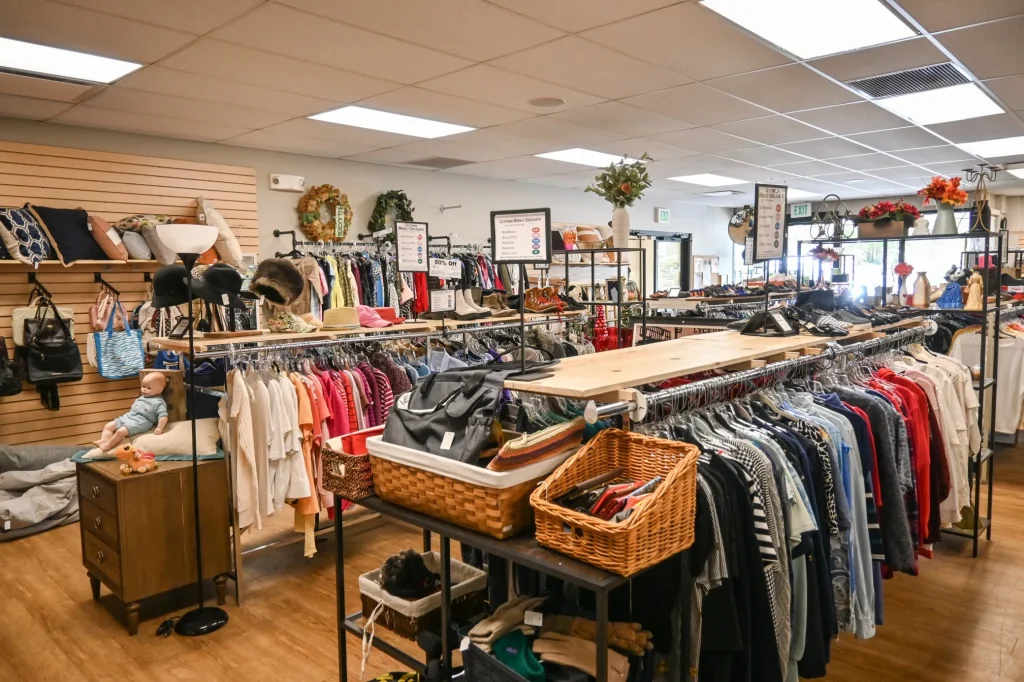
Thrift Outlets and Bin Stores: You can visit these locations to buy clothing by weight. The prices are low, but you must spend more time sorting and inspecting items.
Garage and Estate Sales: Sellers at garage and estate sales are usually willing to negotiate, particularly near the end of a sale. You can source amazing vintage clothing, fashion accessories, and home goods.
Retail Clearance Sections: Outlet stores, department stores, and brand websites sometimes discount new items heavily. Avoid buying simply because something is on sale. Check sold listings before investing.
Online Marketplaces: You can also visit Facebook Marketplace, eBay lots, local selling apps, and online auctions to source items in bulk. Include shipping and other costs when calculating profit.
Wholesale and Liquidation Suppliers: These sources are more suitable for experienced resellers. Start with a small order and verify the supplier before purchasing large quantities.
Always calculate the cost of goods before sourcing. An item bought for $20 and sold for $40 may appear profitable, but Poshmark fees, packaging expenses, discounts, and your time reduce the actual return.
Step 5: Research Demand Before Buying or Listing Items
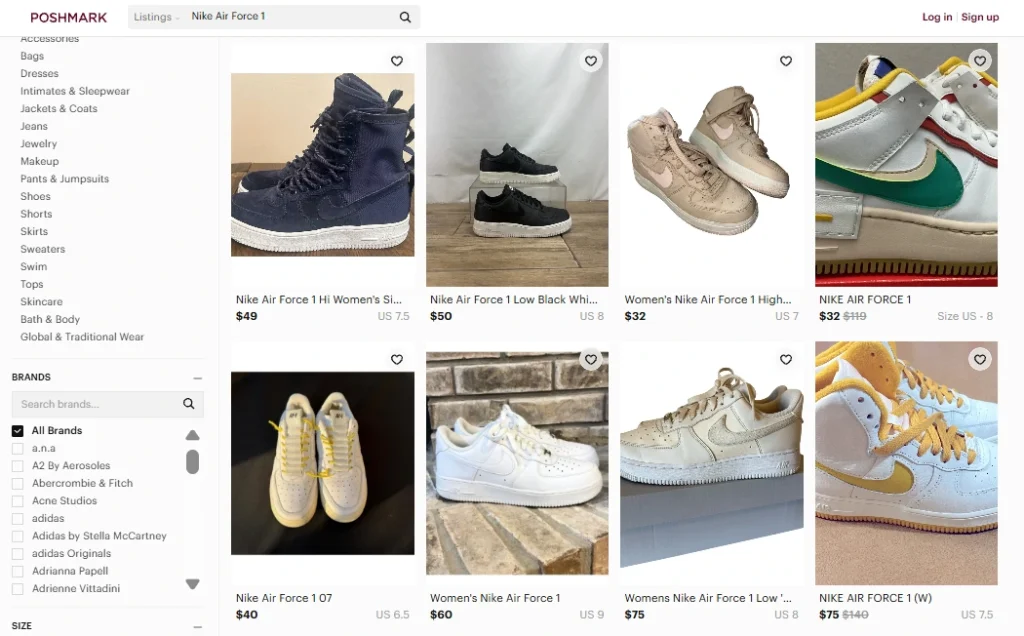
Search for the exact item on Poshmark and filter the results to sold listings.
Sold listings show what buyers actually paid, while active listings only show what sellers hope to receive.
Compare the brand, style name, size, color, condition, material, and included accessories.
A new leather handbag with its dust bag should not be compared directly with a damaged bag missing its strap.
Also consider how many similar items are currently available. If hundreds of identical items are listed but only a few have sold, you may face strong competition.
Set a minimum expected profit before sourcing. This will prevent you from filling your storage space with low-demand items that require significant work but produce little income.
Step 6: Clean and Inspect Every Item
Always examine and clean the item before photographing it. Wash, steam, lint-roll, wipe, polish, or sanitize it according to the material and care instructions.
Inspect seams, pockets, buttons, snaps, zippers, straps, hems, and linings. Check shoes for sole wear and handbags for damaged corners, peeling material, stains, or tarnished hardware.
Record every flaw you find. Small stains, loose threads, scratches, missing buttons, fading, alterations, and odors should be disclosed in both the photographs and description.
Take measurements while the item is available. For tops, record the chest, length, shoulders, and sleeve length. For bottoms, include the waist, rise, inseam, and leg opening.
Accurate inspection and honest condition reporting reduce buyer questions and protect you if someone later claims the item was not as described.
Step 7: Take Clear and Complete Photos

Photograph the item in bright natural light or under balanced artificial lighting. Use a plain wall, neutral floor, foam board, mannequin, or uncluttered background.
Your first Poshmark listing image is the cover shot. It should show the entire item clearly because buyers usually decide whether to open a listing based on this image alone.
Use the available photo slots to show:
– The full front and back
– Both sides of the item
– Brand and size labels
– Fabric texture
– Care and material labels
– Measurements
– Closures and hardware
– Shoe soles and insoles
– Bag corners and interior lining
– Every stain, scratch, or other flaw
Step 8: Write an SEO-Friendly Title
Use words that a real buyer is likely to type into the Poshmark search bar. A standard Poshmark listing title structure is:
Brand + Item Type + Color + Important Feature + Size
For example:
“Free People Ivory Lace Long Sleeve Blouse Size Medium”
This listing title is more searchable than “Beautiful Cute Top.”
Include the official style name if you can verify it. Relevant descriptive terms may include high-rise, cropped, wide-leg, leather, embroidered, waterproof, vintage, or oversized.
Do not add unrelated brands or popular keywords to attract traffic. Misleading keywords make the Poshmark listing look untrustworthy and will bring shoppers who have no interest in the item.
Keep the most important information near the beginning of the title, particularly the brand and item type.
Step 9: Write a Detailed Description
Start your product description with a clear sentence identifying the item. Then explain its style, material, fit, features, condition, and measurements.
A good Poshmark listing description should include:
– Brand and item name
– Label size
– Approximate measurements
– Material composition
– Color
– Important design details
– New or pre-owned condition
– Visible wear or damage
– Included accessories
– Care information
– Relevant styling suggestions
Avoid writing only “excellent condition” or “worn a few times.” Explain exactly what the buyer should expect.
For example:
“Pre-owned in very good condition with light wear on the heels. No stains, holes, or missing hardware. Please review all photographs for condition.”
Never hide a flaw because you fear it will reduce the price.
A disclosed flaw will lower the selling price, but an undisclosed flaw will lead to a refund, poor rating, and loss of buyer trust.
Step 10: Select the Correct Listing Details
Choose the correct department, category, subcategory, brand, size, color, quantity, condition, and availability.
These fields matter because Poshmark buyers use them to filter search results.
A black women’s medium blazer may not reach its intended buyer if it is placed in the wrong department or assigned the wrong size.
Select “New With Tags” only when the item is genuinely new and still has its original retail tags attached.
Explain whether the item has been stored for a long time, has shelf wear, or contains imperfections despite being unworn.
Use the size printed on the label, but include measurements in the description.
If the item has been altered, clearly explain that the current measurements differ from the original size.
Review all fields before publishing to make sure copied information from another listing has been removed.
Step 11: Research Sold Prices and Set Your Price
Search sold listings on Poshmark before setting the price of your item. Identify the normal selling range for items with similar condition, size, color, and demand.
Poshmark currently charges a flat $2.95 commission for sales under $15. For sales of $15 or more, the seller keeps 80%, while Poshmark takes a 20% commission.
Work backward from your desired profit. Suppose you want to receive $40 after Poshmark’s 20% fee. You would need to sell the product for approximately $50 before considering your item, shipping, and packaging costs.
Build negotiation room into the price because many Poshmark buyers expect to make an offer. Pricing approximately 15% to 30% above your real target gives you space to negotiate.
However, do not set a price far above sold-market value. An unrealistic price will prevent buyers from opening the listing or making an offer.
Step 12: Publish the Listing and Store the Item
Proofread the title, description, price, measurements, and condition details. Make sure every flaw appears in the photographs and written description.
Publish the listing on Poshmark and then open it as a buyer would. Check whether the cover shot looks clear, the title is readable, and the description is properly formatted.

Assign the item a storage location immediately. You can use numbered bins, labeled shelves, garment racks, or sealed inventory bags.
For example:
– Bin A12
– Shoe Shelf B4
– Rack C, Section 2
Record that location in a spreadsheet, inventory system, or the listing’s SKU field. Organized inventory prevents you from having to cancel a sale on Poshmark because you cannot find the item.
Moreover, protect stored items from moisture, direct sunlight, dust, smoke, pets, and strong household odors.
Step 13: Share Your Listings Without Oversharing
Sharing refreshes a listing in Poshmark’s “Just Shared” search sorting and signals activity to the Poshmark algorithm.
Poshmark has also stated that sharing counts as activity and refreshes listings in the Just Shared search view.
Poshmark does not publicly provide a guaranteed daily share limit.
Third-party seller research commonly places the temporary restriction threshold near 10,000 shares within a rolling 24-hour period.
Because this is not an officially published number, sellers should not treat 10,000 as a safe target.
A more cautious approach is to remain under approximately 8,000 total shares per day, preferably around 5,000 to 7,000 when managing a very large closet.
Also, spread the sharing activity throughout the day instead of performing thousands of actions in a short burst.
Most Poshmark sellers do not need that many shares. Sharing your full Posh closet two to three times per day is usually good enough.
A seller with 200 listings who shares the closet three times performs only 600 self-shares.
If you overshare, Poshmark may temporarily restrict your ability to share. Poshmark calls this “share jail.”
Step 14: Respond to Likes, Offers, and Counteroffers
When a Poshmark buyer likes your listing, you can send an offer to the liker. This private offer gives interested shoppers a reason to purchase instead of continuing to browse.
All inactive Poshmark offers expire after 24 hours. A seller has up to 24 hours to accept, decline, or counter a buyer’s offer.
Although you technically have 24 hours, try to respond within one to three hours if possible.
This is a recommendation rather than a Poshmark rule. A quick response to an offer reaches the shopper while they are still interested and before they buy from another seller.
Do not automatically decline a low offer. Counter with a price that still protects your profit. A low offer shows that the shopper has enough interest to begin negotiating.
Accepted offers are binding on Poshmark. Purchases completed through “Make an Offer” on Poshmark generally cannot be canceled as accidental purchases.
Step 15: Receive and Check the Poshmark Shipping Label
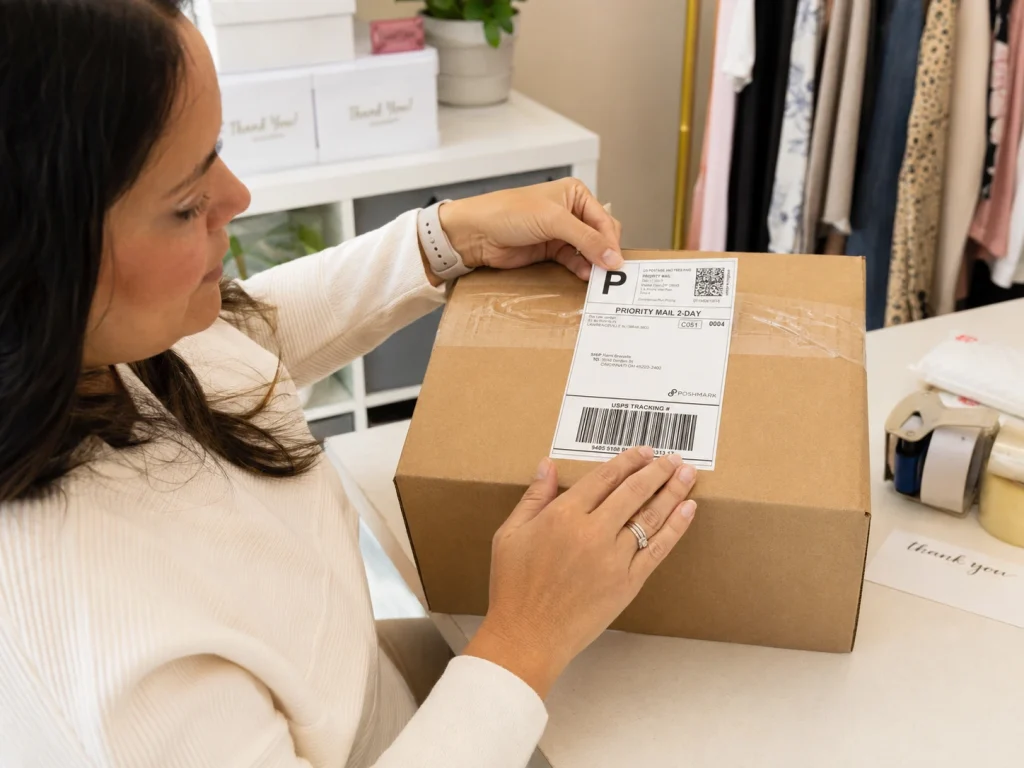
After a completed sale, Poshmark automatically generates a prepaid shipping label and sends it to the email address registered with your account.
Poshmark does not promise a specific number of minutes, but the label is normally generated as soon as the order is fulfilled.
Check your inbox, spam folder, promotions folder, and the email address connected to your Poshmark account.
If the email does not arrive, you do not have to wait for customer support. Open the order page and request anew shipping label.
Always confirm the buyer’s name and order details before attaching the shipping label.
When several items sell close together, mixing up two shipping labels will send the wrong orders to both buyers.
Step 16: Package and Ship the Order on Time
Inspect the item one final time before packaging it for shipping.
Compare it with the listing, remove lint, confirm that all included accessories are present, and make sure no new damage has occurred during storage.
Package the item according to its material. Clothing may need a protective inner bag, while shoes, bags, electronics, and fragile home items require stronger protection.
Poshmark gives sellers up to 7 days from the purchase date to ship an order.
However, Poshmark recommends sellers to ship within two days and recommends communicating with the buyer when shipping will take longer than two or three days.
For better reviews and customer satisfaction, aim to ship within one or two business days.
If the order has not shipped within seven days, the buyer generally receives the option to cancel the order beginning on the eighth day.
Keep the carrier receipt until tracking begins. The receipt may help prove that the package was dropped off if the first scan is delayed.
Step 17: Cancel an Order Only When Necessary
A Poshmark seller does not receive a fixed three-hour or seven-day cancellation window. Poshmark allows the seller to cancel the sale at any point before the order is shipped.
Possible reasons include discovering undisclosed damage, being unable to locate the item, or realizing that the listing contained a serious error.
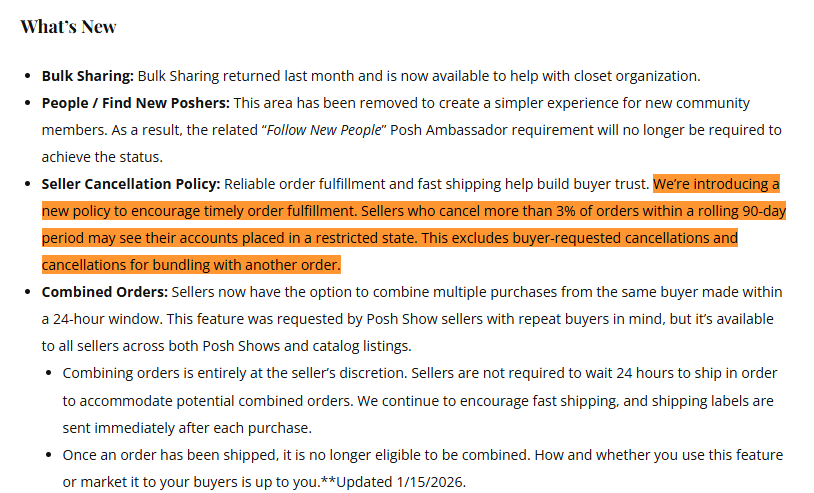
However, if your order cancellation rate exceeds 3% of your total orders in a rolling 90-day period, your Poshmark account will face temporary restrictions or permanent suspension, according to Poshmark New Order Cancellation Policy.
Use Vacation Hold when you will be unavailable rather than accepting orders you cannot ship.
Step 18: Receive Your Poshmark Earnings
The buyer has three days after delivery to inspect the item, accept the order, or report an eligible problem.
If the buyer manually accepts the order earlier, Poshmark will release the seller’s earnings sooner.
If the buyer takes no action and does not open a case, the order will be automatically accepted after the three-day inspection period and the funds will be released to the seller’s Poshmark balance.
Once the money appears in your redeemable Poshmark balance, available withdrawal options include Instant Transfer, PayPal, Venmo, direct deposit to a bank account, or a mailed check.
Direct deposits normally take an additional two to three business days to settle after the withdrawal request, excluding weekends and holidays.
Step 19: Review, Improve, and Relist Unsold Listings
Review Poshmark listings that have received little interest. An item may remain unsold because of weak photos, missing keywords, unrealistic pricing, seasonal demand, or heavy competition.
Improve the listing before assuming that the item itself is undesirable.
Replace the cover shot, rewrite the title, add measurements, disclose condition more clearly, and compare the price with recently sold listings.
Older items most often benefit from relisting on Poshmark, but avoid repeatedly deleting and relisting the same items within short periods.
Relisting should be used to refresh genuinely stale items, not manipulate Poshmark search results.
When you relist on Poshmark, make meaningful improvements instead of relisting the same item again.
7 Poshmark Mistakes That Kill Sales (I Made Most of Them)
1. Using Dark, Blurry, or Lazy Photos
Poor photos make you lose buyers on Poshmark. Shoppers cannot touch, try on, or inspect your item in person, so your pictures must do all the selling.
Dark lighting can hide the item’s true color, while blurry images make buyers question its condition.
Cluttered backgrounds, wrinkled clothing, and cropped-out details can also make a good item look cheap or poorly maintained.
I now photograph items in bright light and use a clean and simple background. I also include the front, back, label, material tag, measurements, close-up details, and any flaws.
One good cover shot outperforms several average listings. When an item receives views but no engagement on Poshmark, I improve the item photos before lowering the price.
2. Writing Keyword-Free Titles
A title such as “Adorable Dress!!” may sound appealing, but it gives Poshmark’s algorithm almost no useful information.
Buyers on Poshmark usually search for specific details such as a brand, style, color, size, material, or item type.
Your Poshmark listing title should be something like “Reformation Blue Floral Midi Dress Size Medium.”
It immediately tells the buyer what the item is and gives the Poshmark listing a better chance of appearing in relevant Poshmark search results.
I try to structure every Poshmark listing title using the most important searchable details: brand, item type, style, color, and size. I avoid wasting valuable title space on emojis, excessive punctuation, and vague words.
The clearer your title is, the easier it becomes for the right buyer to find your listing.
3. Ignoring or Declining Offers
Low offers feel insulting, especially when you have spent time photographing, measuring, listing, and sharing an item on Poshmark.
My early reaction was usually to decline the offer or ignore it completely. That approach rarely helped me make a sale.
An offer on Poshmark shows that someone is interested enough to start a negotiation.
Even when the opening price is far below my minimum, I usually send a counteroffer. Some buyers accept, while others respond with a higher number that is much closer to my target.
Before listing, I decide the lowest amount I am willing to accept. This makes it easier to counter without becoming emotional.
A decline ends the conversation. A counteroffer keeps the buyer engaged and gives the sale another chance.
4. Pricing Without Checking Sold Listings
One of my biggest mistakes was pricing items according to what I paid, what I hoped to earn, or what I personally believed they were worth.
Unfortunately, Poshmark buyers do not care about your emotional attachment or original purchase price. The market decides what an item is worth.
Before pricing, I search for sold listings of the same or similar item. I compare the brand, style, size, color, condition, and season.
Active Poshmark listings give you an idea of what other Poshmark sellers are asking, but sold listings reveal what buyers are actually paying.
I then price slightly above my ideal selling price to leave room for offers and promotions.
5. Going Silent for Days
Poshmark rewards consistent activity. When I stopped sharing, listing, following, and responding to offers for several days, my Posh closet became noticeably quieter.
Poshmark listings were pushed further down in search results, fewer buyers interacted with my items, and sales slowed.
Returning to Poshmark after a long break also meant spending hours trying to rebuild momentum.
Consistency does not mean spending all day on the Poshmark app. Even a simple routine can help. I try to share my closet, list a few new items, respond to offers, and engage with buyers on a regular basis by liking their items.
Now, I mostly use the Sidekick Tools app because I don’t have hours to share items or sit all day responding to offers.
6. Hiding or Minimizing Flaws
Hiding a stain, missing button, loose thread, scratch, or small hole can help an item sell faster, but it also creates a much bigger problem after delivery.
A disappointed buyer may open a case, request a return, or leave a poor rating. That lost trust can affect your future Poshmark sales, especially when other shoppers review your seller history.
I now inspect every item carefully under strong lighting. I disclose flaws in the description and include clear close-up photos. I also explain whether the issue affects the item’s appearance or usability.
Honest item descriptions attract Poshmark buyers who understand exactly what they are purchasing. Some flawed items still sell quickly when they are priced fairly.
A transparent Poshmark seller may lose an occasional buyer, but they build a stronger reputation over time.
7. Treating It Like a Hobby While Expecting Business Results
It is fine to be active on Poshmark casually. However, don’t expect consistent business income while managing your Posh closet without systems and goals.
In the beginning of my reselling journey, I focused only on the sale price. I did not always calculate my cost of goods, selling fees, shipping discounts, packaging costs, or actual profit.
Later, I realized that an item I sold for a good price on Poshmark produced a disappointing return.
Now, I track everything, including what I paid for an item, when I listed the item, what it sold for, and what I earned after expenses.
Moreover, I monitor which brands, items, categories, sizes, and price ranges sell fastest.
How Top Poshmark Sellers Scale? (They Work Smarter, Not 12 Hours a Day)
Here’s the pattern I’ve noticed observing successful Poshmark closets, the ones doing hundreds of sales a month.
They don’t share more diligently than you. They don’t refresh the app more often. They’ve simply divided their Poshmark reselling business into two buckets:
Tasks Only a Human Do Well:
1. Sourcing items that are in-demand
2. Taking item photos for listings
3. Responding to buyers’ messages
4. Pricing listing with market judgment
Tasks That Can be Automated:
1. Sharing hundreds of listings multiple times daily
2. Sending offers the moment someone likes an item
3. Following active Poshers in your niche
4. Relisting items that are old
5. Countering lowball offers at 2 a.m.
6. Crosslisting items to other marketplaces
Top sellers on Poshmark pour their limited hours into the first bucket and automate the second. That’s the entire “secret.”
Sidekick Tools is one such automation app that exists precisely for that second bucket. Here’s what it takes off your plate:
1. 24/7 Automated Sharing: Self-shares, community shares, share-backs, and smart party sharing that only shares items relevant to the party theme, all paced to mimic human behavior and avoid share jail.
2. Automatic Offers to Likers: Offers go out as likes come in, day and night, so you never miss a hot lead.
3. Lowball Blocker: Set your floor price once, and incoming offers get countered automatically.
4. Bulk Relisting and Delisting: Old Poshmark items get relisted automatically, and sold items get removed so you never double-sell.
5. AI Listing Tools: Stock photo creation, bulk background removal, and SEO-optimized description generation.
6. Crosslisting to 7 Marketplaces: Crosslists your Poshmark listings to eBay, Mercari, Depop, Whatnot, Grailed, Etsy, and vice versa.
7. Sales Analytics: You can see what’s selling, what’s sitting in your closet, and where to adjust your pricing.
You can try Sidekick Tools for free for 7 days with no credit card required, and see what your Poshmark closet does when it’s active around the clock.
Frequently Asked Questions (FAQs)
Is it free to sell on Poshmark?
Yes, listing is completely free. Poshmark only takes a fee when your item sells: a $2.95 flat fee on sales under $15, or a 20% fee on sales of $15 and above.
How do I get paid on Poshmark?
Once your buyer receives the item and accepts it (or three days pass), your earnings are released. You can transfer them to your bank via direct deposit, use instant transfer for a small fee, or spend them as Posh credit.
Who pays for shipping on Poshmark?
The buyer usually pays the flat shipping fee on Poshmark, and you get a free prepaid USPS Priority Mail label for packages up to 5 pounds. You can offer shipping discounts to sweeten deals, but that cost comes out of your earnings. Packages over 5 pounds require a label upgrade paid by you.
How long does it take to make your first sale on Poshmark?
It varies widely. Well-photographed, in-demand items priced against sold comps can sell within days. Slower items may take weeks. Consistent sharing and sending offers to likers dramatically shortens the wait.
Is Poshmark automation allowed?
Automation tools operate in a gray area of Poshmark’s terms, so choose carefully. There are automation tools like Sidekick Tools that protect your account by mimicking natural human behavior, pacing activity, and staying within Poshmark’s activity limits. Avoid any automation tool that blasts unrealistic activity levels.
What sells fastest on Poshmark?
Athleisure (especially Lululemon and Nike), current-season denim, designer handbags, sneakers, and new-with-tags items in popular sizes sell the fastest on Poshmark. Check Poshmark’s sold listings in your niche to see what’s hot right now.
Can I sell on Poshmark from outside the US?
No, you cannot natively sell on Poshmark from outside supported regions (US, Canada, UK, Australia, and India). To sell on the US platform specifically, you need a US mailing address for returns and a US-based bank account to withdraw your earnings.