Skip to content

Is reselling legal?
Yes, reselling is legal in the United States and across most countries around the world.
If you legally purchased an item, federal law gives you the right to sell it again — whether that’s a thrifted Patagonia jacket, a clearance-rack find, or half your closet.
That right comes from a legal principle called the First Sale Doctrine, and it’s the foundation the entire resale economy is built on.
But “legal” doesn’t mean “anything goes.” Sell the wrong items, misuse a brand name, or ignore your tax obligations, and a harmless side hustle can turn into fines, account bans, or worse.
In this guide, we’ll walk you through exactly where the legal lines are in 2026 — including the tax rule change that most reselling blogs still get wrong.
Quick note: This article is general information, not legal or tax advice. For decisions specific to your business, talk to a licensed attorney or tax professional.
What is Reselling?
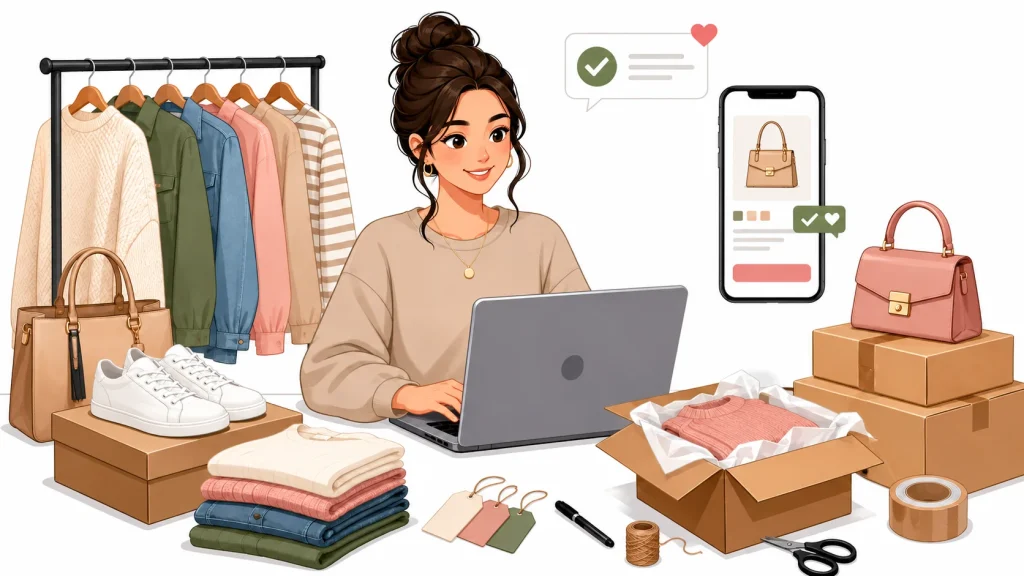
Reselling means buying a product (new or used) and selling it to someone else, usually at a profit.
You’re not manufacturing anything, and you’re not acting as an authorized distributor. You’re simply the next owner of an item, exercising your right to sell what you own.
In practice, that looks like:
– Flipping a $6 thrift-store blazer for $25 on Poshmark
– Buying clearance items at Target and relisting them on eBay or Mercari
– Sourcing vintage tees at estate sales and selling them on Depop or Grailed
– Reselling limited-edition sneakers you bought at retail
The moment you start doing it consistently, which involves sourcing inventory, listing across multiple marketplaces, and shipping orders every week, you’re no longer reselling.
In the eyes of the IRS and your state, you’re running a business. That doesn’t make reselling any less legal; it just means a few more rules apply to you.
The First Sale Doctrine: Your Legal Right to Resell
The First Sale Doctrine, codified in Section 109 of the U.S. Copyright Act, says that once a copyright or trademark owner sells a physical product, their control over that specific item ends.
The buyer can resell it, lend it, or give it away without asking anyone’s permission.
Three things follow from this:
You Don’t Need the Brand’s Approval.
Nike can’t stop you from reselling a pair of authentic Air Jordans you bought at retail.
Similarly, Lululemon can’t stop you from flipping leggings you found at a consignment shop.
As long as the item is genuine and you’re honest about its condition, the brand has no legal claim against you.
It Covers New and Used Items Alike.
Retail arbitrage, thrift flips, liquidation pallets, estate-sale finds — the doctrine doesn’t distinguish. If your purchase was legal, your resale is protected.
It Only Covers Physical Products.
E-books, software licenses, and most digital goods are licensed to you, not sold, and those licenses are usually non-transferable.
You can resell a paperback; you generally can’t resell your Kindle copy of the same book.
There’s one meaningful limit: the protection applies to the item as you bought it.
If you materially alter a product, like repackage it, remove serial numbers, strip out included parts, or bundle branded items into a new “kit” under your own name, you can lose that protection and open yourself up to trademark claims.
When Does Reselling Become Illegal?
Reselling itself is never the crime. What you sell, and how you represent it, is where sellers get into trouble.
Selling Prohibited or Restricted Items
Some inventory is off-limits no matter how you sourced it:
1. Stolen Items. Even if you bought them unknowingly, you can’t legally keep or sell stolen property — and “I didn’t know” is much harder to argue if you have no receipts.
2. Counterfeits. Selling fakes is trademark counterfeiting, a federal offense that carries civil and criminal penalties. Listing a knockoff bag as “inspired by Chanel” doesn’t fix it.
3. Recalled Products. Under the Consumer Product Safety Act, it’s illegal to sell recalled items, including secondhand baby gear, which is one of the most common accidental violations among resellers. Check CPSC.gov before listing children’s products.
4. Regulated Categories. Alcohol, prescription medication, medical devices, weapons, and certain cosmetics require licenses or are banned from marketplace resale entirely.
Misusing Trademarks in Your Listings
You can name a brand truthfully — “Authentic Coach crossbody, gently used” is fine. What you can’t do is mislead.
Calling a generic item “Nike-style,” using a brand’s official stock photos without permission, or implying you’re an authorized dealer when you’re not can all trigger intellectual-property complaints.
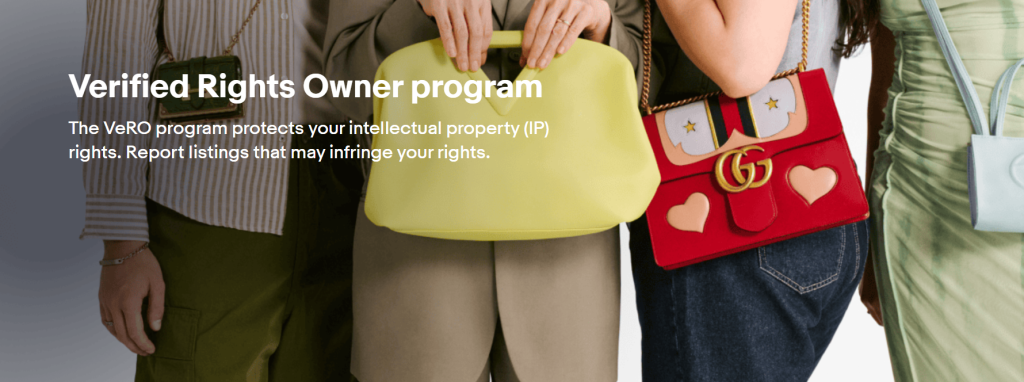
On eBay, that’s what the VeRO program exists for: rights holders can report listings and get them removed, and repeat violations get accounts suspended.
A Related Point: A takedown is not a verdict. Platforms remove listings for their own policy reasons all the time, and a flagged listing doesn’t automatically mean you broke the law. But repeated flags will ban your selling account regardless, so treat platform rules as seriously as legal ones.
Do Resellers Have to Pay Taxes?
Yes — and this is where most older articles will steer you wrong, because the rules changed dramatically in mid-2025.
For years, resellers were told a $600 1099-K threshold was coming. It never fully arrived!
The One Big Beautiful Bill Act, signed in July 2025, repealed the lower thresholds entirely and retroactively restored the original federal rule.
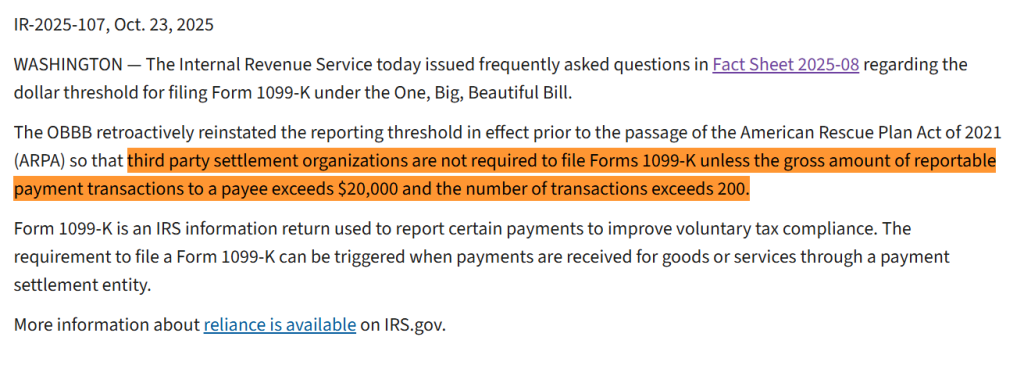
As confirmed by the IRS in October 2025, a marketplace or payment platform now only issues you a Form 1099-K if you receive more than $20,000 in gross payments AND more than 200 transactions in a calendar year.
Three critical caveats before you celebrate:
1. All resale profit is still taxable. The 1099-K threshold changes what gets reported to the IRS by platforms — not what you owe. If you make a profit reselling, you’re required to report that income whether or not a form shows up in January.
2. Several states kept lower thresholds. States including Massachusetts, Maryland, Vermont, Virginia, and Illinois require 1099-K reporting at $600–$1,000, so you may still receive forms even below the federal line.
3. Gross proceeds aren’t profit. A 1099-K reports total payments, not earnings. Your actual taxable income is sales minus your cost of goods sold and business expenses — which is why record-keeping matters so much.
The upside of being a “real” business: deductions. Inventory costs, shipping supplies, marketplace fees, mileage to the thrift store, and software subscriptions are all legitimate write-offs when you’re operating with a profit motive.
Sellers who track cost of goods and fees per item all year, rather than reconstructing a shoebox of receipts in April, keep more of their profit and have documentation ready if the IRS ever asks.
(This is one place a sales-analytics dashboard like the one built into Sidekick Tools quietly pays for itself.)
Do You Need a Business License or Resale Certificate for Reselling?
It depends on your volume and in which U.S. state you’re reselling.
– Part-Time Resellers: Clearing out their own closets usually need nothing.
– Full-Time Resellers: Operating for profit may need a general business license from their city or county — requirements vary widely, so check your local government’s website.
– A Resale Certificate: Sometimes called a seller’s permit lets you buy inventory without paying sales tax, because tax will be collected when you sell it. If you source from wholesalers or liquidators, this is worth getting; most states issue them free or cheap through the Department of Revenue.
One thing you largely don’t have to worry about anymore: collecting sales tax on marketplace orders.
Under marketplace facilitator laws now in effect in every U.S. state with a sales tax, platforms like Poshmark, eBay, Mercari, and Depop calculate, collect, and remit sales tax on your behalf.
Can You Legally Resell at a Higher Price?
In almost all cases, yes. Buying low and selling high is not price gouging — it’s commerce.
Marking up a rare vintage piece, a sold-out sneaker, or an item you cleaned, photographed, and authenticated is completely legal.
The exception is declared emergencies.
Most states in the U.S. have anti-price-gouging statutes that activate when a state of emergency is declared, capping markups on essentials like food, water, fuel, medicine, and safety supplies.
Some U.S. states cap increases at around 10%, others use broader “unconscionable pricing” language.
Flipping collectible handbags is fine year-round; flipping generators at triple price during a hurricane is how resellers end up in attorney-general press releases.
5 Habits That Keep Resellers Out of Legal Trouble
1. Keep proof of purchase for everything. Receipts, order confirmations, even screenshots from sourcing apps. Documentation is your defense against stolen-goods accusations and your evidence for tax deductions.
2. Learn each platform’s rules before you list. Every marketplace has its own restricted categories and brand-protection programs, and violations cost accounts, not just listings.
3. Verify authenticity before you buy inventory. If a “deal” on branded goods seems too good, it usually is. Counterfeit liability falls on the seller — you.
4. Check recalls on children’s items and electronics. Thirty seconds on CPSC.gov before listing can prevent a genuinely serious violation.
5. Track your numbers all year. Log what you paid, what you sold it for, and every fee in between. Come tax season, you’ll file accurately and deduct confidently.
Resell Legally, Scale Smartly
So — is reselling legal? Absolutely.
The law is firmly on your side when you sell authentic items you legally own, describe them honestly, and report what you earn.
The sellers who run into trouble aren’t the ones flipping thrift finds; they’re the ones cutting corners on sourcing, trademarks, or taxes.
Once the legal side is squared away, the real challenge is operational: listing across marketplaces, staying visible in search, and keeping inventory synced so you never double-sell.
That’s the work Sidekick Tools automates — crosslisting to seven marketplaces, auto-delisting sold items, sending offers to likers, and tracking your sales and fees in one dashboard.
Start your free 7-day trial (no credit card required) and spend your time sourcing and reselling more items, not copy-pasting.
Frequently Asked Questions (FAQs)
Is it legal to resell items from Amazon, Walmart, or Target?
Yes. Retail arbitrage is protected by the First Sale Doctrine. Just don’t alter the products, misrepresent their condition, or claim to be an authorized retailer.
Do I need permission from a brand to resell their products?
No. If the item is authentic and unmodified, you can resell it and truthfully name the brand in your listing. You cannot use brand logos in your own branding or imply an official partnership.
Will I get a 1099-K for reselling in 2026?
Only if a single platform processes more than $20,000 AND more than 200 transactions for you in the year — though a handful of states require reporting at $600–$1,000. Either way, your resale profit is taxable income and must be reported.
Do I need an LLC to start reselling?
No. You can legally resell as a sole proprietor. An LLC adds liability protection and can simplify banking as you scale, but it’s optional, not a legal requirement.