Skip to content

If you sell the same stuff on Depop in 2026 that worked in 2023, you will watch your sell-through rate drop. The platform has changed, the buyers have changed, and the trend cycle itself has changed.
Depop’s own 2026 trend report, called “The Edited Self,” describes the shift clearly. Gen Z buyers are moving away from chasing weekly micro-trends and toward smaller, more intentional wardrobes built on fewer, better pieces.
In this guide, we’ll break down the best selling items on Depop in 2026, the best brands to sell on Depop, where to source inventory, and what your pricing strategy should be.
So, let’s begin!
Why Depop Is Worth Your Time in 2026
Before we get to the best items to sell on Depop, let’s talk money, because Depop is one of the best reselling websites in the US.
Depop dropped its old 10% selling fee back in 2024. In 2026, US sellers pay zero commission — only a payment processing fee of about 3.3% plus $0.45 per transaction.
Compare that to Poshmark’s 20% commission on sales over $15. On a $50 sale, you keep roughly $47.70 on Depop versus $40 on Poshmark. On a $100 vintage jacket, that gap is real profit, not pocket change.
The buyer base matters just as much. Around 90% of Depop’s users are under 26. That means the platform caters to a very young buyer base.
The 2026 Context: “The Edited Self”
Depop’s 2026 forecast identifies four themes driving search and sales on the platform. Every winning item this year fits into at least one of them.
Modern Uniforms. Buyers are building capsule wardrobes and repeating outfits on purpose. Depop reports search spikes for workwear jackets, peacoats, structured blazers, and office shirts.
Mixed-era nostalgia. Instead of copying one decade, buyers layer ’70s coats with ’90s knits and Y2K accessories. Archival pieces from brands like Emilio Pucci, Missoni, Von Dutch, and Ed Hardy are trending again.
Romanticized routines. Everyday dressing is becoming an occasion. Depop shows strong gains in kitten heels, draped skirts, metallic fabrics, and statement jewelry.
New athleticism. 2026 is a World Cup year, and it shows. Depop data reveals major spikes in vintage jerseys, upcycled jerseys, ski-inspired layers, and vintage Lululemon.
Keep these four themes in mind as we go through the specific items. They explain why each category sells, not just that it sells.
The Best Selling Items on Depop in 2026
1. Vintage Sports Jerseys (The World Cup Play)
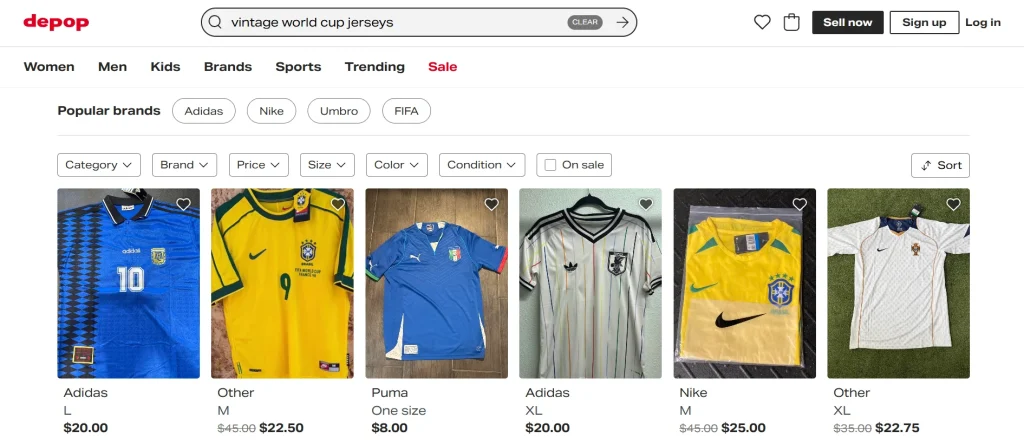
This is the single biggest timing opportunity of the year. The 2026 World Cup is hosted in North America, and “blokecore” — the trend of styling football jerseys as everyday fashion — is peaking alongside it.
What to buy: National team jerseys, 90s and 2000s club football shirts, vintage NBA and NFL jerseys, and upcycled or cropped jerseys. Host nation kits (USA, Mexico, Canada) plus perennial favorites like Brazil, Portugal, and Argentina will sell like crazy.
Pricing: Standard vintage jerseys sell in the $20–$40 range on Depop. Rare archival pieces — older kits, iconic player names, unusual sponsors — can be sold for more.
Why it works on Depop: Sports jerseys are loud, graphic, and instantly recognizable in a scrolling Depop feed. They photograph well, and the young buyer base treats them as statement pieces, not sports memorabilia.
The caveat: This category is crowded. Common modern Nike and Adidas jerseys face heavy competition, so rarity and condition decide whether you’ll profit or sit on stock. Learn to spot reproductions — buyers are getting sharper about fakes.
2. Vintage Levi’s and Baggy Denim
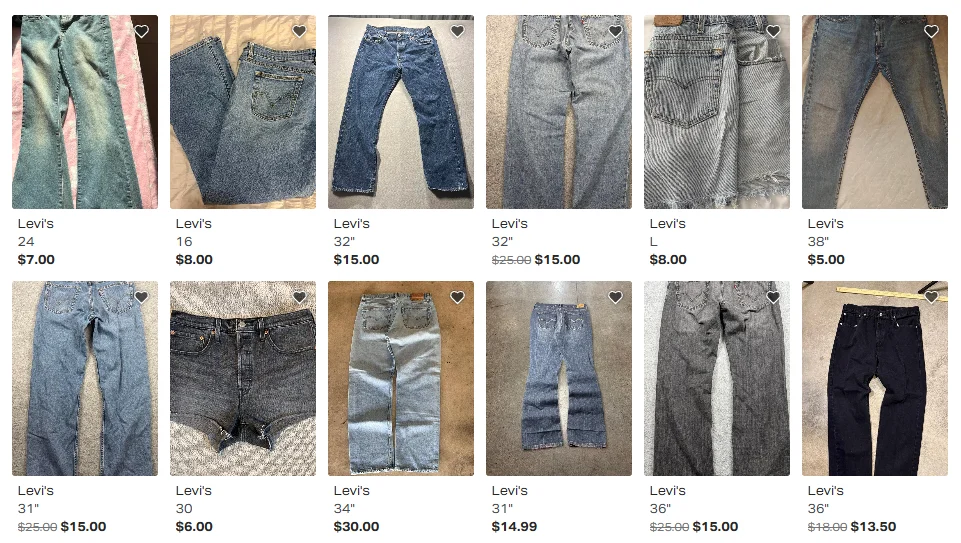
Vintage denim never leaves the top of Depop’s charts, but the winning silhouettes shift. In 2026, baggy, straight-leg, and skater-fit jeans dominate, and vintage Levi’s remains the anchor brand.
What to buy: 80s and 90s Levi’s 501s, 550s, and 560s, especially light washes and high waists. Smaller sizes move fastest on Depop because the buyer base skews young and fashion-focused. Levi’s Type III denim jackets are a bonus find.
Pricing: Solid vintage Levi’s typically sell for $15–$30 on Depop. “Made in USA” tags and single-stitch details push prices higher.
Why it works on Depop: Denim sits at the intersection of two 2026 themes: nostalgia and capsule dressing. A good pair of vintage 501s is both an archival piece and a wardrobe staple, which is exactly what “The Edited Self” buyer wants.
Pro tip: Always list flat measurements (waist, inseam, rise), not just the tag size. Vintage sizing runs differently, and measurement-rich listings both rank better in search and cut down on returns.
3. Vintage Carhartt and Workwear

Workwear is one of the most reliable money-makers in resale right now, and prices keep climbing. Vintage Carhartt in particular has become a grail category.
What to buy: Detroit jackets (model J97), chore coats, and double-knee work pants. Look for “Made in USA” and union-made tags, the older script logo, and honest fade or distressing — buyers pay extra for character. Dickies Eisenhower jackets and vintage Wrangler round out the category.
Pricing: Used Carhartt Detroit jackets commonly sell for $50–$250 on Depop, with rare colorways and vintage jackets clearing $300–$400. 90s double-knee work pants have been clearing $20–$150.
Why it works on Depop: Faded, oversized workwear looks striking in photos and slots directly into the “Modern Uniforms” trend. It also carries the durability story — buyers see it as a piece that lasts, which fits the buy-less-buy-better mindset.
4. Quiet Luxury Basics and Knitwear

Here is where most Depop resellers are still asleep, and where the growth numbers are wildest. Searches for “minimal” on Depop have jumped over 800% into 2026.
What to buy: Neutral cashmere and wool knits, structured blazers, peacoats, pleated trousers, quality button-downs, and clean-lined pieces from brands like COS, The Row, Ralph Lauren, Jil Sander, and even Gap for basics.
Pricing: Cashmere typically resells for $40–$200 depending on the brand, with pieces from labels like The Row commanding far more. Structured blazers and wool coats sit comfortably in the $20–$150 band.
Why it works on Depop: This is the purest expression of “The Edited Self.” Buyers want versatile pieces they can repeat, and secondhand is the only way most Gen Z shoppers can afford 100% cashmere. Fabric content is your selling point — photograph the material tag and state fibers plainly in the title.
The margin angle: Quiet luxury pieces are still cheap to source because thrift stores price a plain grey COS sweater like any other sweater. The gap between sourcing cost and resale value is wider here than in saturated sportswear.
5. Y2K and Archival Statement Pieces

Y2K refuses to die — it just evolved. In 2026, buyers mix eras rather than cosplay one decade, and loud archival brands are surging back.
What to buy: Ed Hardy and Von Dutch pieces, Emilio Pucci and Missoni prints, Roberto Cavalli, baby tees, low-rise pieces, vintage tracksuits, and butterfly-era accessories.
Pricing: Basic Y2K tops sell in the $15–$45 range and move fast. Authentic designer archival pieces (Pucci, Cavalli, Missoni) can run $100–$400+, especially with original tags or documented provenance.
Why it works on Depop: Bold prints and recognizable graphics stop the scroll. Depop’s discovery feed is visual-first, so items that look distinctive in a thumbnail get disproportionate engagement compared with plainer pieces.
6. Vintage Sportswear: Champion, Adidas, Nike, Lululemon
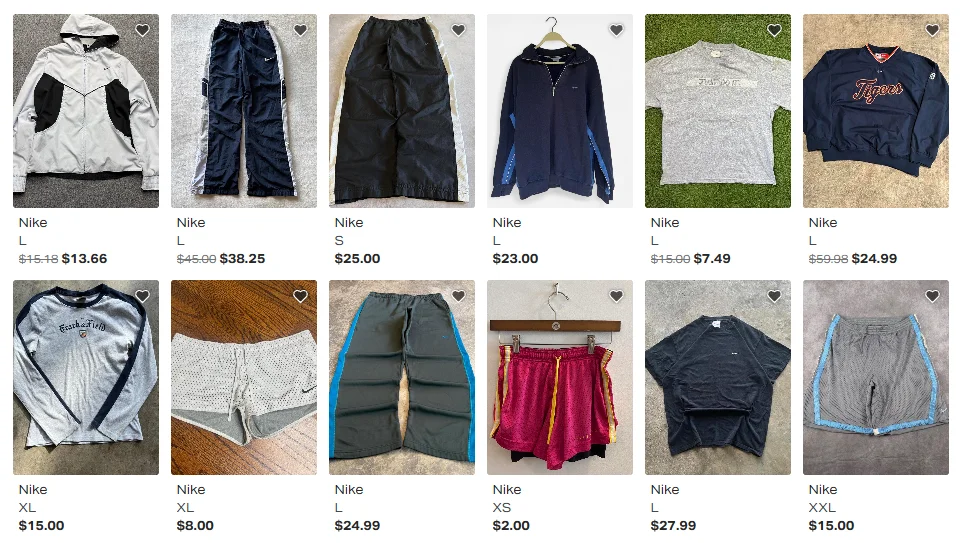
Retro sportswear stays a Depop staple, but the data shows which names are actually accelerating. Searches for brands like Champion, Adidas, and Onitsuka Tiger are up by 250%.
What to buy: Champion Reverse Weave sweatshirts, vintage Adidas track jackets, retro Nike graphics, Onitsuka Tiger sneakers, and — the sleeper hit — vintage Lululemon, which Depop specifically flags as spiking in 2026.
Pricing: Standard vintage sportswear usually sells at $20–$40. Rare 70s–80s archival pieces can exceed $50. Common modern Nike hoodies, on the other hand, fight brutal competition and thin margins.
Why it works on Depop: Sportswear bridges the athleticism trend and the nostalgia trend at once. In a World Cup year, that cultural energy compounds. Just remember the rule: unique or rare wins; common gets buried.
7. Statement Accessories and “Occasion Everyday” Pieces
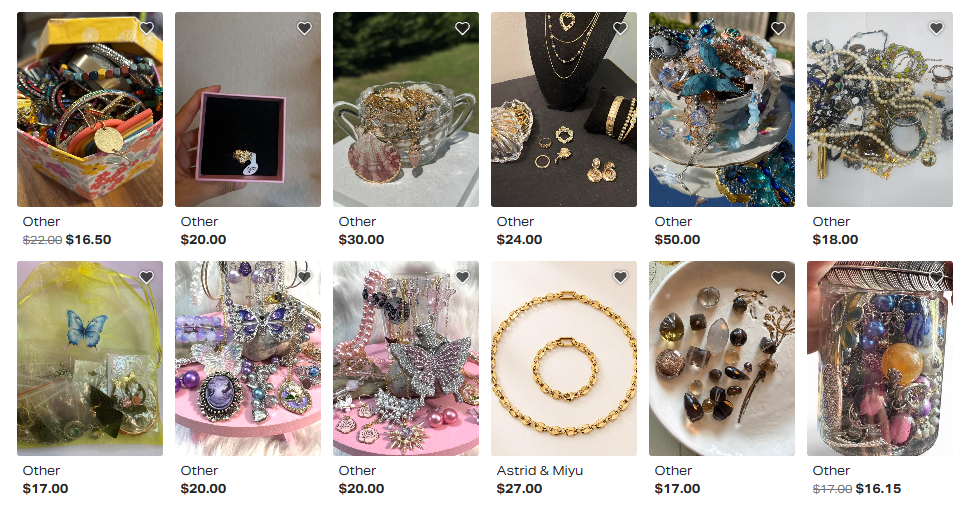
The “romanticize your routine” trend creates demand in a category many clothing resellers ignore: accessories and elevated basics.
What to buy: Statement and layered jewelry, kitten heels, ballet flats, metallic fabrics, draped skirts, and tailored coats. Vintage silk scarves and small leather goods fit here too.
Pricing: Jewelry and small accessories typically sell for $10–$50, but they cost almost nothing to ship and bundle beautifully. Kitten heels and quality flats land in the $25–$80 range.
Why it works on Depop: Accessories are low-risk purchases for young buyers, which means high conversion. They also make perfect bundle add-ons — and since Depop charges its processing fee once per transaction, bundles raise your average order value without raising your fee count.
Best Brands to Sell on Depop in 2026
If you only remember one list from this article, make it this one. These are the brands with documented momentum on Depop this year, grouped by trend:
Sportswear and Blokecore: Adidas (searches up 168%), Champion (+242%), Nike, Puma, Onitsuka Tiger (+120%), and vintage Lululemon.
Quiet Luxury and Minimalism: COS (search interest up as much as 360–696% across reports), The Row (+126%), Phoebe Philo (+200%), Jil Sander, Ralph Lauren, and Gap for basics (+210%).
Workwear and Heritage: Carhartt, Dickies, Levi’s, Wrangler, and Woolrich.
Y2K and Archival Revival: Ed Hardy, Von Dutch, Emilio Pucci, Missoni, and Roberto Cavalli.
The fastest-growing names are not the ones most resellers stock. Everyone hunts Nike hoodies. Almost nobody hunts COS knitwear, and that mismatch between supply and demand is where margins live.
Where to Source Items to Sell on Depop?
Great inventory is 80% of the reselling business. Here is how successful sellers actually source in 2026, from lowest cost to most scalable.
Thrift Stores and Outlet Bins
Still the cheapest cost per item, but the most time-expensive.
The bins work for beginners building brand knowledge, but six hours of digging for ten good items does not scale.
Use them for high-value hunting: Carhartt, vintage Levi’s, and quiet luxury labels others overlook.
Estate Sales and Flea Markets
The best hunting ground for older archival pieces — 70s coats, designer vintage, rare denim.
One well-known reseller example: a 1980s Levi’s Type III jacket bought for $15 at a flea market resold for $45.
Inconsistent, but the ceilings are high.
Wholesale Vintage Suppliers
This is how Depop sellers scale.
Wholesalers sell graded bales and curated mixes (for example, “90s sportswear” or graphic tee lots) at a low cost per unit.
The trade-off is that you accept some duds in every bale, so buy Grade A stock and confirm grading definitions before ordering.
Online Arbitrage
eBay bulk lots, Facebook Marketplace, Vinted, and even underpriced Depop bundles can feed your shop.
Japanese vintage suppliers are also a known source of high-quality curated pieces.
Pricing Strategy: What the Numbers Actually Look Like
Let’s make the math concrete, because vibes don’t pay for inventory.
Say you source a vintage Champion Reverse Weave for $8 from a wholesale mix and sell it for $55. Depop’s fee is roughly $2.27 (3.3% + $0.45). After $5 in shipping supplies and label costs, you net around $39 — nearly a 5x return.
Across a whole shop, experienced sellers report typical profit margins of 30–50% after all costs. The variables that push you toward the high end are sourcing cost, sell-through speed, and bundling.
Three pricing rules that separate professionals from hobbyists:
Price from sold comps, not asking prices. Search sold listings for your exact item and price within that range. Wishful pricing kills sell-through, and slow sell-through kills cash flow.
Leave room for offers. Depop buyers negotiate by culture. Price about 10–15% above your true floor so an accepted offer still hits your margin.
Treat Boosted Listings as ad spend, not a default. Boosting adds a 12% fee when a boosted item sells. It works for strong listings in crowded categories, but boost everything and your effective fees creep back toward the old commission days.
Why These Items Sell Best on Depop Specifically
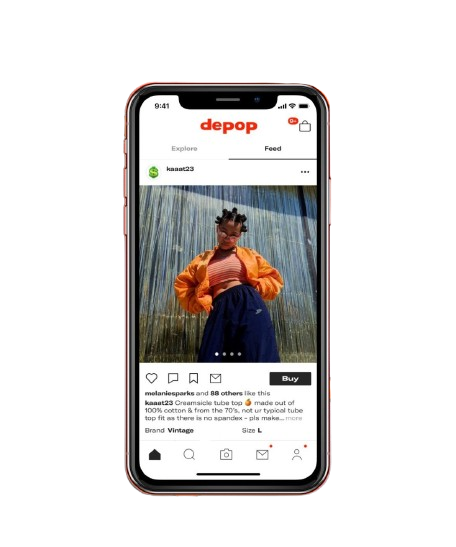
Here is the insight most “what to sell on Depop” articles miss: Depop is a discovery platform, not a search platform, and that changes which inventory wins.
On Poshmark or eBay, buyers type a brand, size, and color, so commodity branded items with search volume sell fast.
On Depop, buyers scroll a visual feed the way they scroll TikTok. Rare colorways, bold graphics, distinctive washes, and strong styling get engagement precisely because they stand out in a grid of thumbnails.
This is why a faded, oversized 90s Carhartt outsells a clean modern one, and why a plain black Nike hoodie — a great eBay item — can sit on Depop for months. Match your inventory to how the platform’s buyers actually shop.
It also means your photos are your storefront. Model shots or styled flat lays, natural light, and a consistent shop aesthetic aren’t nice-to-haves on Depop; they are the difference between 12 likes and a sale.
Quick-Fire Tips to Make More Sales on Depop in 2026
Write searchable titles. “90s Carhartt Detroit Jacket Brown Large Union Made” beats “vintage gem!!” every time. Depop’s search matches the words buyers type.
Use every photo slot. Show the front, back, tags, fabric content, and any flaws. Honest flaw photos build trust and prevent disputes.
Respond fast. Sellers who reply to messages within a few hours consistently move inventory faster than slow responders.
List daily. Fresh listings feed the Depop algorithm. This is exactly why a wholesale baseline matters — it keeps your shop active even in weeks when you can’t go hunting.
Ride the calendar. Front-load jerseys before World Cup summer, knitwear and workwear before fall, and Y2K party pieces before festival season.