 Skip to content

Depop hashtags can make or break your listings, and still most Depop sellers use them wrong. They chase trendy hashtags when the real game is simpler: Depop gives you just 5 hashtag slots per listing, and every slot counts.
Think of those 5 slots as 5 doorways into your listing. Smart Depop sellers open five different doors; everyone else opens one door and hangs five signs on it.
This guide will give you a simple 5-slot formula, plus ready-made Depop hashtag sets for eleven popular item types. Copy them, tweak them, and paste them into your Depop listings today.
What Are Depop Hashtags?
Depop hashtags are search labels you attach to a listing, each one starting with the “#” symbol. Depop sellers add them so items surface when shoppers search or browse the Depop app.
Each tag tells both Depop’s algorithm and real buyers what your item is. A tag can be the name of the product, its brand, its era, or its aesthetic.
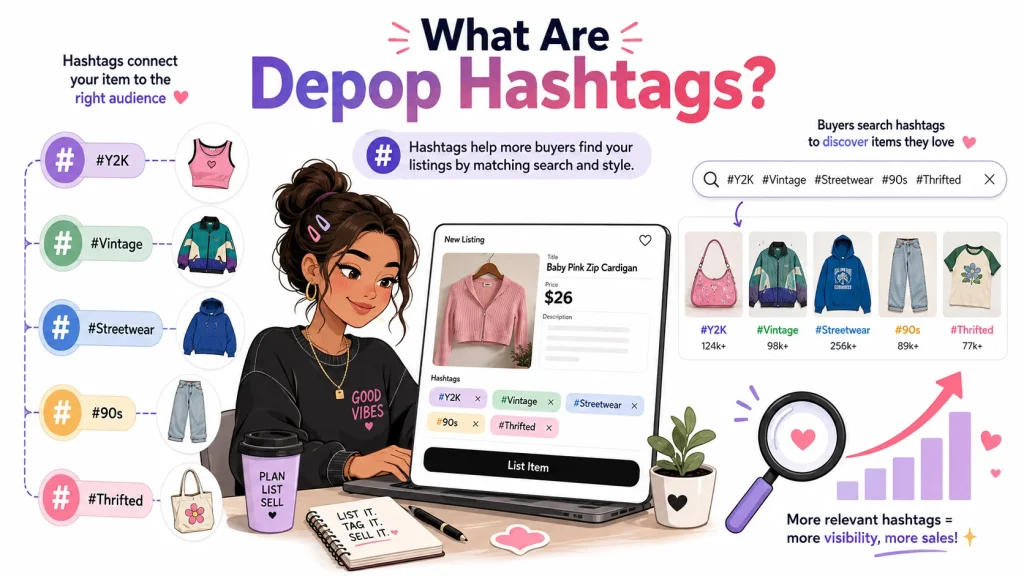
When used the right way, hashtags put your Depop listings in front of the right shoppers instead of random ones. More of the right eyes on an item means faster sales.
How Do Depop Hashtags Work?
Depop hashtags are search keywords attached to your listing. When a buyer types “Y2K top” or taps a hashtag on another listing, Depop shows items with matching tags.
Hashtags work alongside your title, description, category, and brand field. But they do one special job: they catch buyers who shop by style, era, and aesthetic instead of exact product names.
Before we get to the tag sets, you need three ground rules. Break any of them, and even perfect tags won’t save your Depop listing.
Rule 1: The Hashtag Limit Is 5, So Use All 5
Every empty hashtag slot is a search you chose to skip. Five hashtags give buyers five different ways to find the same item.
Rule 2: Every Hashtag Must Be Honest
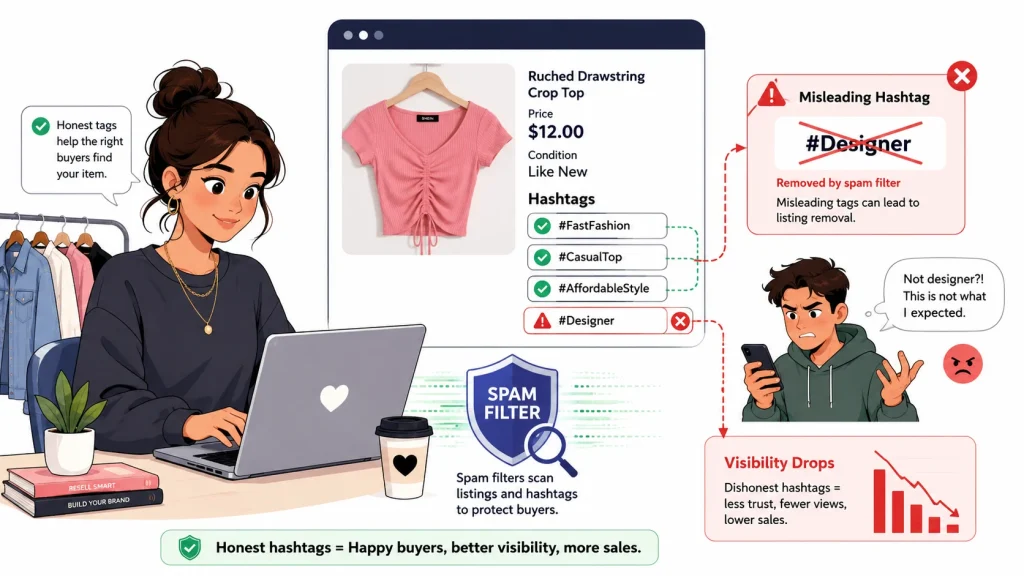
Depop punishes misleading hashtags with spam filters and listing removals. Tag a Shein top as #designer, and you’ll annoy buyers and hurt your own visibility.
Rule 3: Hashtags Support Your Listing; They Don’t Replace It
Fill in the category, brand, size, color, and condition fields first. Buyers filter searches by these fields, and an empty field keeps your item out of those results completely.
Once those basics are set, hashtags catch what the fields can’t: aesthetics, eras, and subcultures.
How to Choose Your Hashtags on Depop?
Stop brainstorming Depop hashtags from scratch for every listing. Instead, give each of your 5 hashtag slots one clear job:
Slot 1 — Item type: what it literally is. #denimjacket, #slipdress, #cargopants
Slot 2 — Era or origin: when it’s from or what era it channels. #90s, #y2k, #truevintage
Slot 3 — Material, fit, or standout detail: the trait buyers filter for. #leather, #oversized, #lowrise
Slot 4 — Primary aesthetic: the style or subculture it belongs to. #grunge, #coquette, #gorpcore
Slot 5 — Secondary aesthetic or trend: a second honest style angle. #streetwear, #fairycore, #indiesleaze
Here’s why this will beat picking five “popular” hashtags. Five versions of one idea — #vintage #vintagestyle #vintagefashion #vintageclothing #retro — put you in one search five times.
The above formula will put you in five different Depop searches once each. Five doorways always beat one door with five signs.
One smart exception: if your item only fits one style, skip the second aesthetic. Use slot 5 for a color or occasion tag instead, like #babypink or #partydress.
What Hashtags to Use on Depop?
Use these hashtag sets as starting points and swap hashtags to match your exact item. Each hashtag set follows the 5-slot formula, grouped by Depop’s three biggest seller niches.
1. Hashtag Sets for Vintage and Era-Based Items
Vintage buyers search by decade, material, and authenticity. Your hashtags should hit all three.
Vintage Denim Jacket
#denimjacket #vintage #90s #grunge #oversized
Band or Graphic Tee
#bandtee #vintagetee #90s #grunge #streetwear
Leather Jacket
#leatherjacket #vintage #moto #grunge #rockerstyle
Knitwear
#knitsweater #wool #vintageknit #grandpacore #cozy
2. Hashtag Sets for Dresses and Feminine Aesthetics
Style searches drive these niches almost entirely. That means slots 4 and 5 are more important.
Slip Dress
#slipdress #satin #y2k #coquette #partydress
Cottagecore Dress
#floraldress #cottagecore #milkmaid #prairiedress #fairycore
Balletcore and Coquette Pieces
#balletflats #coquette #balletcore #bows #babypink
3. Hashtag Sets for Streetwear and Y2K Staples
Streetwear buyers search by fit and brand as much as by style. Keep every brand tag strictly honest.
Y2K Going-Out Top
#y2ktop #2000s #mesh #y2k #mcbling
Streetwear Hoodie
#hoodie #streetwear #oversized #skater #vintagestreetwear
Cargo or Utility Pants
#cargopants #y2k #streetwear #gorpcore #baggyfit
Sneakers
#sneakers #nike #vintagenike #streetwear #y2k (Only use a brand tag when the item truly is that brand.)
Notice what’s missing from every hashtag set: #fashion, #style, #cute, #ootd. These hashtags feel safe but compete with millions of Depop listings and match no real buyer intent.
A Depop buyer searching #balletcore knows exactly what they want and is ready to pay. A buyer searching #fashion doesn’t exist.
Evergreen hashtags like these carry your listings year-round. Trend hashtags work differently, and that difference deserves its own section.
Common Depop Hashtag Mistakes (and What They Cost You)
Copy-Pasting Same Hashtags Across Your Whole Depop Shop
Your silk skirt and your Carhartt jacket should never share five identical hashtags. Duplicate hashtags blur what makes each item unique and drag down engagement listing by listing.
Hashtag-Stuffing the Description
Some Depop sellers cram twenty fake hashtags into their listings’ descriptions. This looks spammy to buyers and risks tripping Depop’s spam detection.
Write a clean and natural listing description instead: brand, material, fit, measurements, condition. Let your 5 real hashtags handle the tag work.
Chasing Volume Over Intent
Big broad hashtags feel safe because they get the most traffic. But ranking on page 40 of a huge search is worth nothing.
A #70sboho searcher scrolls a small pool of listings and is ready to buy. That’s where well-tagged items actually convert.
Using Misleading Era and Brand Hashtags
Tagging a 2019 fast-fashion piece as #truevintage isn’t clever — it’s misrepresentation. It invites disputes, returns, and account strikes.
Avoiding mistakes is half the job. The other half is a routine you can run on every single listing, fast.
A 60-Second Hashtag Workflow for Every Depop Listing
1. Fill in every field first: category, subcategory, brand, size, color, condition.
2. Write a natural description that leads with your strongest keywords: brand, item type, era.
3. Apply the 5-slot formula: item, era, material or fit, primary aesthetic, secondary angle.
4. Gut-check each hashtag: would a buyer searching this term be happy to land on my listing?
5. Publish, then revisit hashtags on anything unsold after 4–6 weeks.
One last tip for crosslisters: hashtags don’t transfer between marketplaces. Depop gives you 5 hashtags, Mercari handles hashtags differently, and eBay ignores hashtags in favor of item details.
Sidekick Tools solves this by crosslisting your Depop items to six other marketplaces and auto-delisting items the moment they sell anywhere. Try it free for 7 days — no credit card required.
Frequently Asked Questions (FAQs)
How Many Hashtags Can You Use on Depop?
Five per listing, and you should use all five. Just never pad the count with irrelevant tags to fill slots.
Do Hashtags Really Help You Sell on Depop?
Yes, when they’re specific and honest. Hashtags are one of Depop’s main discovery channels, especially for style and era searches that titles miss.
Should I Put Hashtags in My Depop Description Too?
Your description is searchable, so weave key terms in naturally. Keep actual hashtags to your 5 slots and write the description for humans.
What Are the Best Hashtags for Vintage Items on Depop?
Combine an item tag, a decade tag, and a material or style tag: #denimjacket #90s #truevintage #grunge #oversized. Save #truevintage for pieces that are genuinely 20+ years old.
How Often Should I Update My Depop Hashtags?
Audit unsold listings every 4–6 weeks and refresh trend tags each season. Styles move fast on Depop, and stale tags anchor your items to dead searches.


